
Last updated November 16, 2026
 Shaker
 Modern flat-panel
 Two-tone cabinets
 KraftMaid
 Cambria quartz
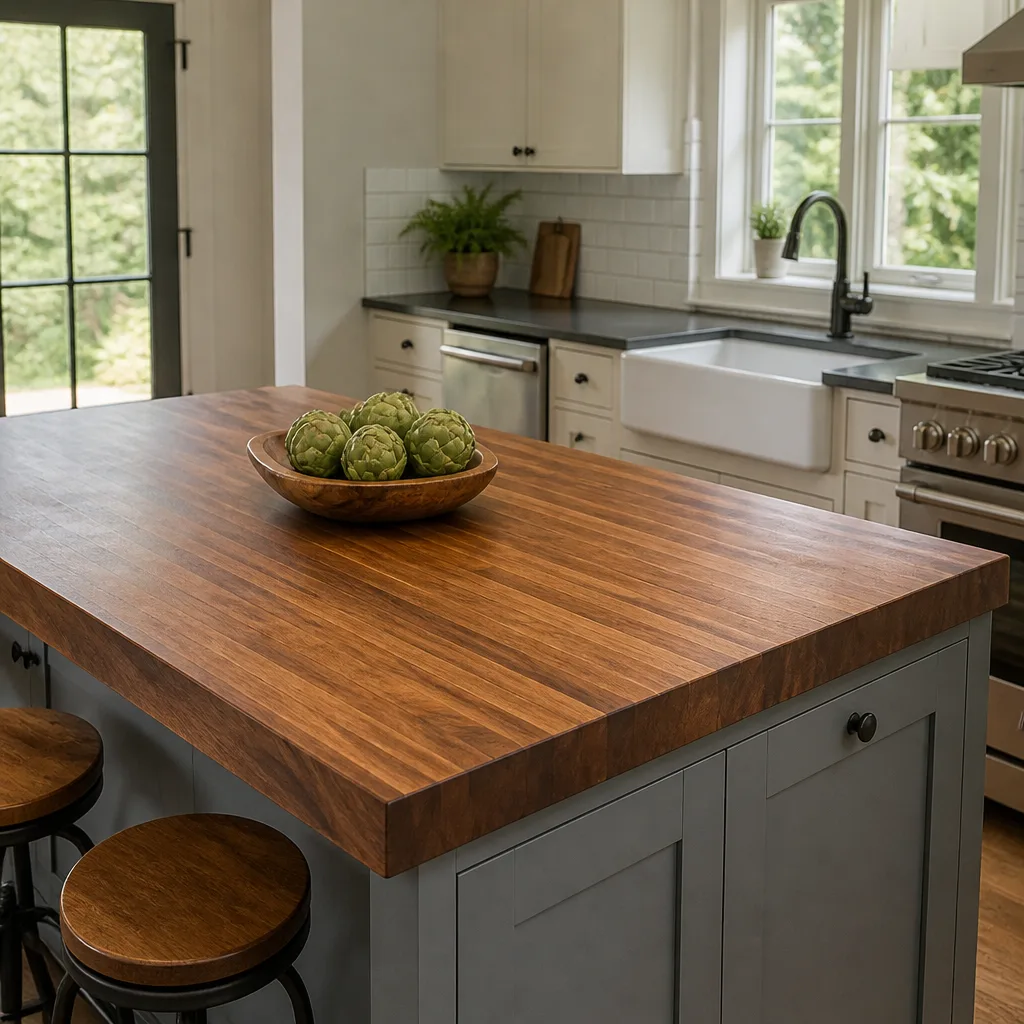 Butcher block
 Open shelving
Free design consultation - KraftMaid and Wellborn cabinet lines, Cambria and Silestone surfaces, and every tier from refacing to full custom laid out side by side
Kitchen Remodeling Maintenance Checklist for Summerlin Homeowners
Most kitchen maintenance advice is written for a $15,000 builder-grade kitchen, and it shows. Wipe the counters. Polish the cabinets. Done. But a Summerlin kitchen built around Cambria quartz, KraftMaid cabinetry, and a Blanco sink isn’t a generic surface you can treat with generic habits. Every premium material in that room has its own cleaning chemistry, its own seasonal weak points, and its own warranty language that punishes the wrong product. What follows is a material-by-material maintenance calendar written for the kitchen you actually own, organized around the desert climate that shapes how that kitchen ages.
Quick Answer
A premium Summerlin kitchen needs four seasonal maintenance passes a year plus a short monthly routine: pH-neutral cleaner on quartz, finish-specific care on cabinets (never the same product across painted MDF, thermofoil, and stained hardwood), descaling for hard tap water, and ventilation checks timed to desert dust cycles. The single most damaging habit is using an abrasive or acidic cleaner on quartz or a wet rag on cabinet seams, because both quietly void the finishes you paid a premium for.
Styles & brands we work with
- Shaker
- Modern flat-panel
- Two-tone cabinets
- KraftMaid
- Cambria quartz
- Butcher block
- Open shelving
Table of Contents
- Why Premium Kitchen Materials Need Different Care
- Cabinet Finish Care by Type: Thermofoil, Painted MDF, and Stained Hardwood
- Quartz vs. Natural Stone: Cleaning and Hard Water in Summerlin
- Fixture Finish Longevity: PVD, Chrome, and What Hard Water Does
- Seasonal Checks for the Summerlin Climate
- Ventilation and Appliance Airflow in a Dusty Desert Home
- A Month-by-Month Maintenance Calendar
- Common Mistakes to Avoid
- When to Call a Professional
Why Premium Kitchen Materials Need Different Care
A premium kitchen is not one material. It is a stack of finishes with different chemistry, different warranties, and different failure modes, and the maintenance routine that protects one can damage another. Cabinet fronts, countertop surfaces, and fixture coatings each live by their own rules.
Take cabinet fronts alone. Factory-finished cabinetry from a line like KraftMaid or Wellborn isn’t a single product. A thermofoil door is a vinyl film bonded to a substrate. A painted MDF door is a coating over a manufactured core. A stained hardwood door is an open-grain surface with a clear topcoat. Three different surfaces, three different tolerances for moisture, solvent, and abrasion. The same spray cleaner that’s fine on a sealed hardwood could cloud a thermofoil film or soften the edge seal on a painted door over time.
Countertops add another layer. Quartz and natural stone respond differently to acid, to heat, and to the hard water that comes out of taps across the valley here. And fixtures are their own story: a PVD-coated faucet and a standard chrome faucet age differently around mineral buildup.
The reason this matters for Summerlin homeowners specifically is climate. Desert air is dry, indoor humidity swings, and the fine dust that settles everywhere in the valley finds its way into cabinet seams, grout lines, and appliance coils. Maintenance here isn’t just cleaning. It’s protecting the finish and the warranty behind it.
We work exclusively with brands you can look up, compare, and hold to a warranty standard, and each of them is specific about how their product should be cared for. That’s the whole reason a material-by-material checklist beats a generic one. The recommendation follows the product, not a habit.
Cabinet Finish Care by Type: Thermofoil, Painted MDF, and Stained Hardwood
Cabinet finish care depends entirely on which finish you have, and treating all your cabinet doors the same way is the fastest route to delamination, clouding, or fading. Identify each finish in your kitchen before you buy a single cleaning product. A semi-custom line like Wellborn will offer more than one surface, and a KraftMaid kitchen may mix door styles and finishes across a single layout.
Thermofoil
Thermofoil is a vinyl film, and its weak point is heat and moisture at the edges. The film can lift where it wraps a door edge if water sits there.
- Wipe with a soft, damp cloth and a mild, pH-neutral cleaner. No solvents, no abrasives.
- Dry the edges and the bottom of each door immediately after cleaning. Don’t let water pool at the seams.
- Keep doors clear of the steam plume from a kettle or a pot that boils too long beside them.
- Watch for lifting film at the corners. Catching it early is easier than repairing a peeled edge.
Painted MDF
Painted MDF doors are a coating over a core, and the coating is what you’re protecting. Abrasive pads dull the sheen, and too much moisture at the base of the door can swell the core.
- Use a soft cloth with a drop of mild dish soap in warm water, then dry fully.
- Skip scouring pads, magic-eraser style blocks, and any cleaner with ammonia.
- Check the bottom edge of cabinet doors under the sink, where splashes collect.
- In dry Summerlin air, painted doors can show hairline checking at the joints over time; keep indoor humidity from swinging wildly.
Stained Hardwood
Stained hardwood has an open grain and a clear topcoat, and it responds best to a light touch and a polish that feeds the finish rather than stripping it.
- Dust with a microfiber cloth before you ever wet the surface. Grit scratches the topcoat.
- Clean with a wood-specific cleaner, not an all-purpose spray.
- Reapply a furniture polish formulated for the finish once or twice a year, more often in the driest months.
- Keep stained cabinets away from direct, long, hot sun on the same door, which fades one panel and not the next.
Across all three, the habit that protects the most is drying after cleaning. Moisture left sitting at a seam is what causes most of the problems we’re describing. The second habit is matching the product to the finish. Cabinet lines from KraftMaid and Wellborn are built to last decades, and a ten-minute, finish-specific routine is what lets them.
Quartz vs. Natural Stone: Cleaning and Hard Water in Summerlin
Quartz is non-porous and easy to clean, but it is not indestructible, and hard tap water is its quiet enemy. Natural stone, by contrast, is porous and needs sealing and a gentler touch with acid. Knowing which surface you’re standing at changes your entire cleaning routine.
Quartz Countertops
Engineered quartz like Cambria, Silestone, and Caesarstone is a very dense, non-porous surface. That means it resists stains and doesn’t need sealing the way natural stone does. But three things still damage it.
- Acids. Vinegar, lemon juice, and acidic bathroom-style cleaners can dull a quartz finish over repeated use. Skip them entirely.
- Abrasives. Scouring powder and rough pads scratch the polished surface. A soft cloth and a pH-neutral cleaner are enough.
- Heat. Quartz can be damaged by a hot pan set down directly. Use a trivet.
Hard Water and Mineral Deposits
This is the one many Summerlin homeowners miss. Tap water across the valley is mineral-rich, and when it dries on a quartz surface it leaves a film of calcium that builds with every drip. The spots around the faucet base and the sink edge are mineral deposits, not soap scum, and a normal all-purpose cleaner won’t touch them.
What works on quartz: a dedicated quartz-safe hard-water remover, or a paste of baking soda and water worked gently around the faucet base and rinsed clean. Never scrape at a mineral deposit with a blade or a scouring pad; you’ll gouge the finish to remove a spot that a proper cleaner would have dissolved.
Prevention beats removal. Wipe up standing water around the sink rim and faucet base as soon as you see it, and dry the surface at the end of the day.
Natural Stone
If your kitchen has natural stone instead of quartz, the routine shifts. Natural stone is porous, so it needs periodic sealing (a simple water-bead test tells you when it’s due), and it’s more sensitive to acid than quartz. Use stone-specific cleaners, seal on schedule, and blot spills fast. We compare Cambria and Silestone and Caesarstone on performance and warranty and aesthetics honestly; natural stone follows the same logic, just with a different care sheet.
Fixture Finish Longevity: PVD, Chrome, and What Hard Water Does
Fixture finish determines how long your faucet looks new, and PVD-coated finishes typically outlast standard finishes in hard water environments. PVD is a physical vapor deposition coating that’s harder and more wear-resistant than plated finishes, which is why it holds up better against the mineral-rich water in Summerlin homes.
PVD-Coated Faucets
A PVD finish resists spotting and scratches more gracefully than a plated chrome, but it still needs care to look its best.
- Wipe with a soft damp cloth and a non-abrasive cleaner.
- Dry after every use if you can, especially the spout and handle.
- Never use a scouring pad or a strong acid cleaner on a PVD surface.
Standard Chrome and Brushed Nickel
Plated finishes are more vulnerable to mineral spotting and to pitting from standing water. Dry them after use, and treat a hard-water spot with a gentle descaler rather than a metal polish that can strip the plating.
Why Brand Matters for the Long Haul
Fixture brands with established warranties and wide replacement-part availability are worth the name on the box, because maintenance eventually means a cartridge, an aerator, or a spout, and you want the part to be findable in a few years. A Moen or Blanco faucet has a customer and a parts channel behind it. When we specify fixtures, we specify Kohler, Moen, and Blanco for exactly this reason: the finish holds, and the parts are there.
One hard-water habit worth building: a five-second dry of the faucet after each use. It’s the most effective descaling routine there is.
Seasonal Checks for the Summerlin Climate
Seasonal kitchen maintenance in Summerlin centers on caulk and grout, because desert heat and temperature swings move materials. Annual inspection of these soft joints prevents water intrusion, which is the most expensive kitchen maintenance failure there is.
The seasons here are hard on the small joints. Summer heat, dry air, and the swing between an air-conditioned room and a warm sink area all work at your caulk and grout.
Caulk Around Sinks
The bead of caulk where your sink meets the counter takes the brunt of temperature swings, splashes, and standing water. When it shrinks, a hairline gap opens, water gets behind it, and the damage begins where you can’t see it.
- Check the bead around the sink rim and the backsplash every season. Run a fingernail along it and feel for a gap.
- Look for cracks, black spots, or a bead that has pulled away from the stone.
- When the bead fails, it needs to be cut out and replaced rather than patched over. A good seal is your water defense.
Grout in Tile Backsplashes
Tile grout behaves differently from caulk. It’s rigid, and it deals with temperature swing by cracking where the wall moves. Among the temperature swings a Summerlin kitchen sees, grout cracks are common in the layer between the backsplash and the counter and around any wall outlet cutout.
Regrouting a small crack is a real preventive task. Keep the grout sealed so it doesn’t absorb splashes at the sink and behind the range, and wipe the tile after cooking so stains don’t set.
Cabinet Hinge and Door Alignment
Seasonal change also affects cabinet doors. Wood and door fronts expand and contract, and hinges loosen over the course of a season. Once a season, check the doors and drawer fronts and tighten the screws. Alignment feels like a small thing until a door starts to bind on the adjacent panel.
Ventilation and Appliance Airflow in a Dusty Desert Home
Fine desert dust accelerates clogging in range hood filters and refrigerator coils, so those two maintenance items need attention more than once a year in Summerlin. Dust in the air settles on the grease that builds on a hood filter, and it collects on the condenser coils behind the refrigerator where it bonds into an insulating layer. Both problems cost you efficiency and shorten the life of expensive appliances.
Range Hood Filters
A range hood does two jobs: it pulls cooking grease out of the air and it pulls dust. In a valley climate, that filter loads up faster than the manufacturer’s guidance assumes.
- Check the filter monthly. Hold it up to the light; if you can’t see through it cleanly, it’s due.
- Wash a metal mesh filter in hot, soapy water or run it through a dishwasher if the manufacturer allows it.
- Replace charcoal or disposable filters on a schedule, not when they start to smell.
- Check the ductwork flap at the wall or roof cap once a season for dust buildup and proper movement.
Refrigerator Coils
The condenser coils on a refrigerator do the heavy lifting of heat exchange, and a mat of dust makes them work harder. In a Summerlin kitchen the coils can coat in a matter of months.
- Pull the fridge out once or twice a year and brush or vacuum the coils.
- Check the door seals at the same time; dust on the seal surface lets cool air escape.
- Keep the fridge air vents clear of boxes and bags packed against the back.
Dishwasher and Ice Maker
Hard water and dust reach these too. Run a dishwasher cleaning cycle with a dishwasher-safe descaler periodically, and check the ice maker line and filter for mineral buildup. The water that forms deposits in your sink is the same water running into the appliances.
Kitchen-only focus means every recommendation we make is specific to how kitchens actually get used, and ventilation is one of the clearest examples. The range hood, the fridge coils, and the small water lines are all kitchen-specific, all affected by the same dust and glass, and all easy to defer until a problem shows up.
A Month-by-Month Maintenance Calendar
A simple calendar is the easiest way to keep a premium Summerlin kitchen on schedule. Group the monthly, quarterly, and seasonal tasks this way, and let the calendar carry the memory.
Monthly Tasks
- Wipe quartz with a pH-neutral cleaner; dry the faucet at the end of the day.
- Check the range hood filter and wash or replace it as needed.
- Dust cabinet fronts with a microfiber cloth; keep the finish-specific cleaner within reach.
Every Three Months
- Clean refrigerator coils and check door seals.
- Descale around the faucet base and sink rim.
- Inspect caulk at the sink seams and the backsplash joints for cracks.
- Tighten cabinet hinges and drawer hardware.
Twice a Year
- Apply furniture polish to stained hardwood cabinets; check the finish on painted and thermofoil doors for wear.
- Check the ice maker line and filters for mineral buildup.
- Deep-clean tile grout and reseal if needed.
Once a Year
- Pull the refrigerator fully out for a thorough coil cleaning.
- Inspect all caulked joints and replace any failed bead.
- Walk the whole kitchen and note any finish damage, door lift, or hardware looseness.
Two trades coordinate well at the same visit: a few of these tasks are worth pairing with a seasonal inspection of the whole room. If part of the kitchen is coming up on a bigger update, kitchen remodeling is the moment to plan finishes and maintenance around each other rather than after the fact.
Common Mistakes to Avoid
- Using acidic cleaners on quartz. Vinegar, lemon, and many bathroom sprays dull engineered quartz over time, and the dulling is cumulative. Keep acid off the surface and use a quartz-safe product.
- Using one cleaner across all your cabinets. A cleaner that’s fine on stained hardwood can cloud thermofoil or soften painted MDF edges. Match the product to the finish, door by door.
- Wetting cabinet seams and leaving them wet. Water at the edge wrap and the bottom of a door is how thermofoil lifts and painted MDF swells. Always dry after cleaning.
- Scraping hard-water spots. Summerlin’s mineral-rich water leaves calcium that people attack with a knife or a scouring pad. A proper descaler or a baking soda paste is the answer; a blade gouges the finish.
- Ignoring caulk because it looks fine from a distance. A gap at the sink seam is invisible until water has already worked behind the counter. Check the bead with a fingernail every season.
- Waiting until the hood filter smells to clean it. By the time you smell grease, dust and grease have already loaded the filter and slowed the hood. Check it monthly.
- Letting dust bond to refrigerator coils. The desert dust that settles behind the fridge turns into an insulating mat on the coils. Every few months, brush them out.
When to Call a Professional
Some of this checklist is a homeowner’s routine. Some of it is a signal to call.
Call a professional if a thermofoil door has started to delaminate beyond a small corner, if a painted door is swelling or checking at the bottom edge, if a quartz surface has a crack or a chip that reaches into the slab, if the caulk has failed in a way that has allowed water to darken the counter substrate or the cabinet base, or if a faucet has begun to leak or the finish has pitted and the cartridge is no longer the issue. These are not maintenance items; they’re repair or replacement decisions, and the wrong fix can make the finish damage worse.
When a kitchen calls for more than routine care, or when you’re planning the remodel that makes this checklist relevant in the first place, Kitchen Remodeling Summerlin offers free estimates in Summerlin. Call (866) 655-6132 and we’ll walk the kitchen with you. We answer 24/7. Fast dispatch from 7am to 7pm, Sunday through Friday.
See the difference
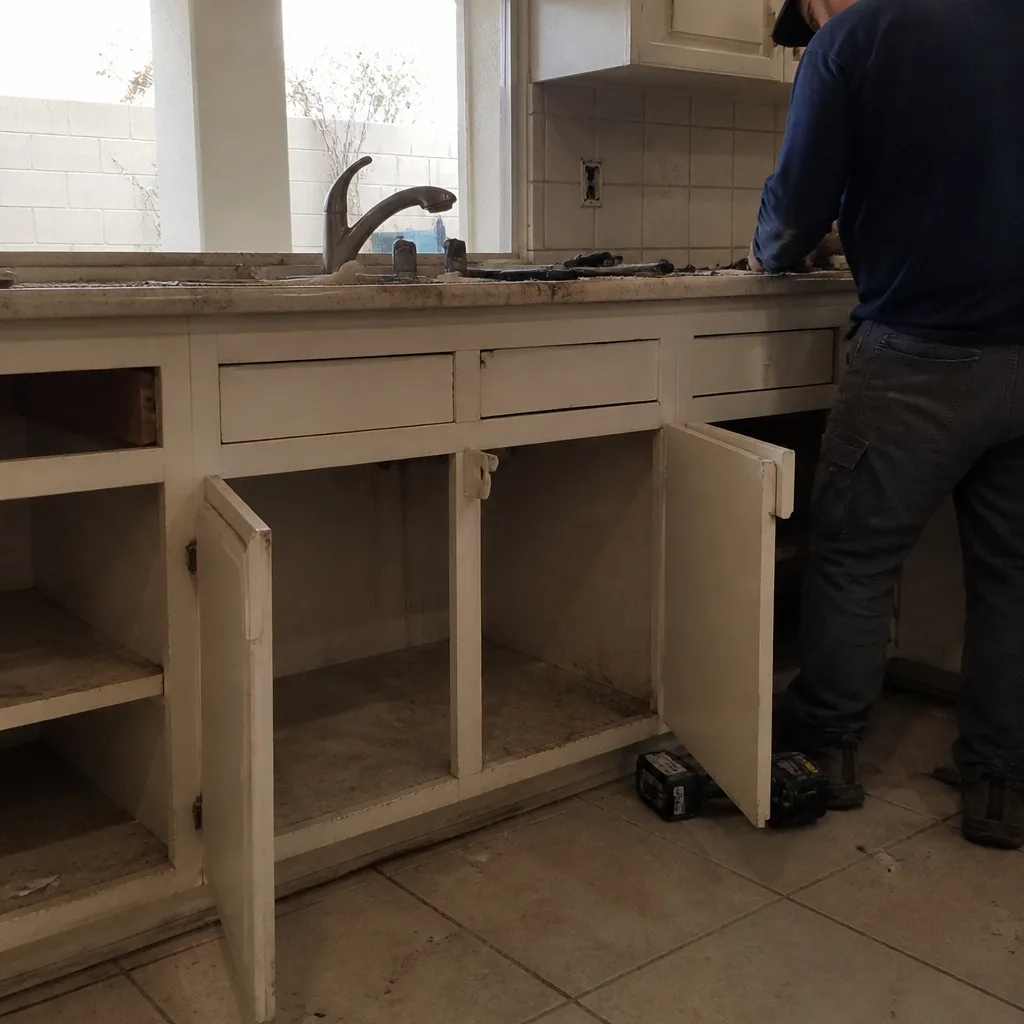 Before
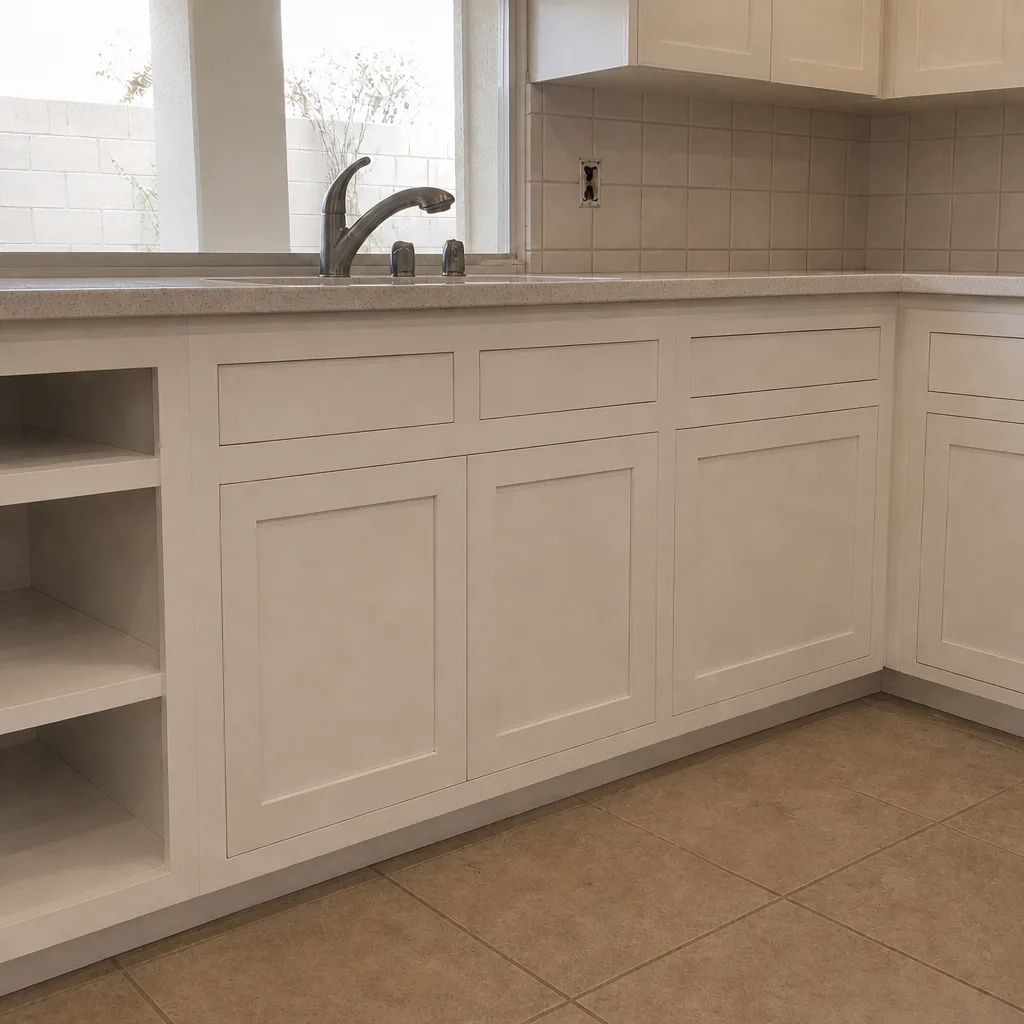 After
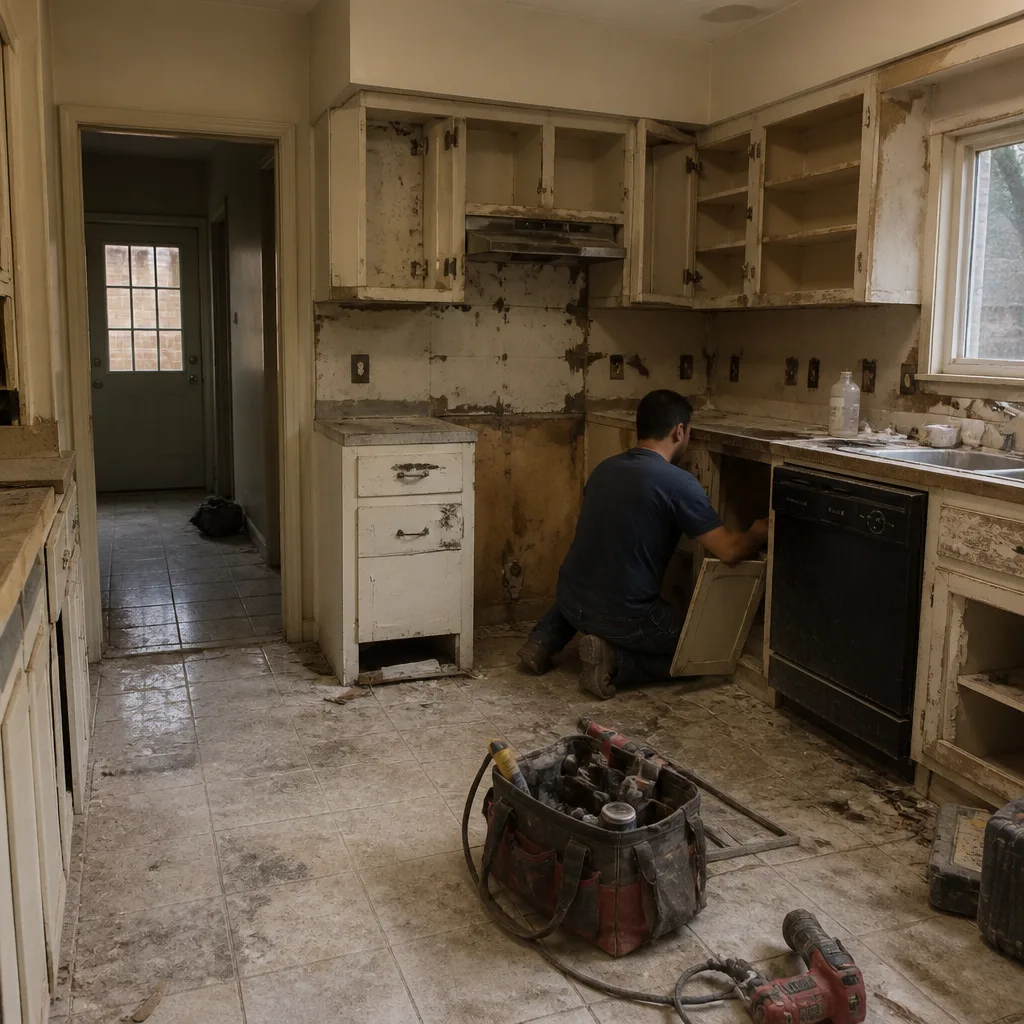 Before
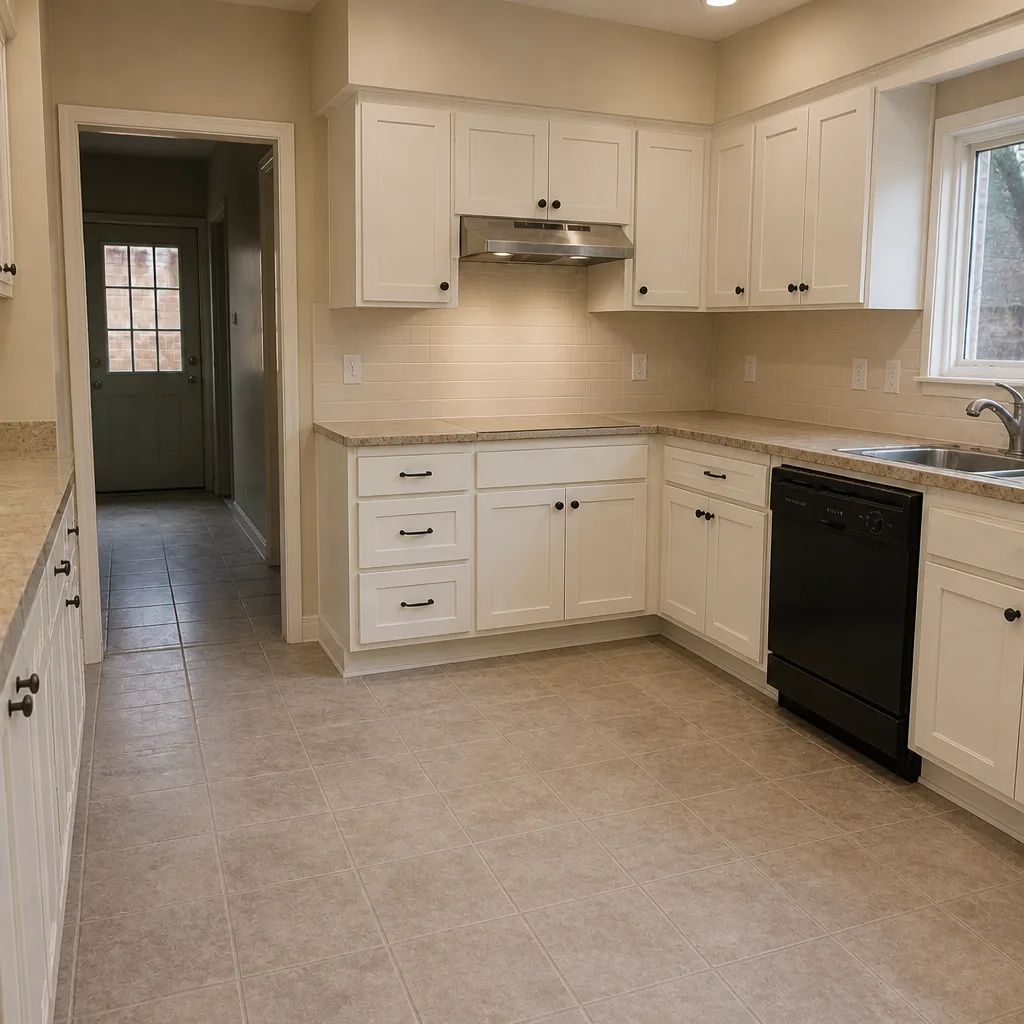 After
 Before
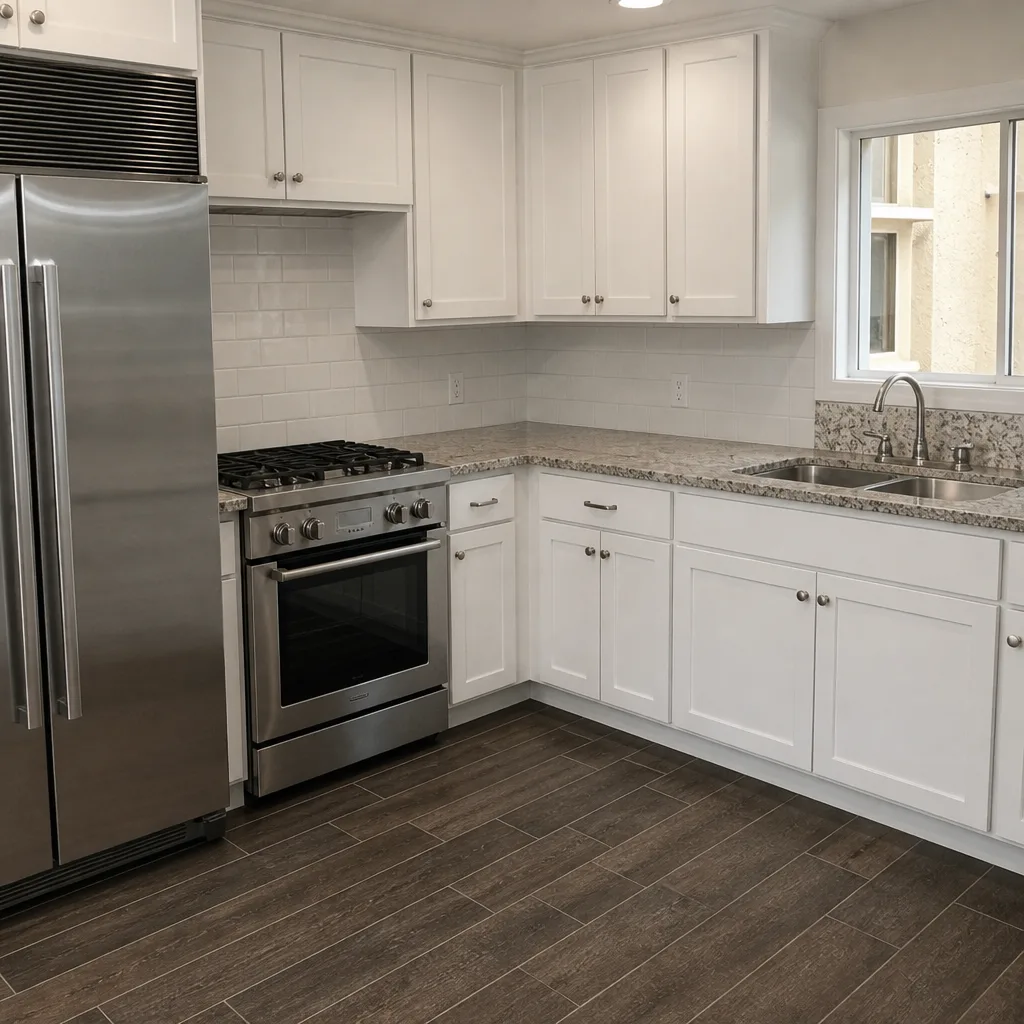 After
Frequently Asked Questions
Use a pH-neutral or quartz-specific cleaner with a soft cloth, then wipe dry. Hard water leaves mineral deposits that a regular spray won’t remove, so use a quartz-safe descaler or a gentle baking soda paste around the faucet base. Avoid vinegar, lemon, and any abrasive pad, because acid dulls quartz and abrasives scratch it. Call (866) 655-6132 if you’re comparing a repair or replacement for a damaged slab; estimates are free.
Dry desert air pulls moisture from wood and from the joints in painted and thermofoil doors, and the result is checking, tightness, and hinge movement. Modern indoor heating and cooling swings the humidity, and the doors feel it. Keep indoor humidity steady, dust before you wet the surface, and adjust hinges seasonally. Call (866) 655-6132 if a door has swollen or a finish has started to fail; estimates are free.
Check the filter monthly and clean it when light no longer passes through. Desert dust speeds up loading, so monthly is a better baseline here than the once-every-few-months that manufacturers often assume. Wash metal mesh filters in hot soapy water or a dishwasher if approved, and replace disposable filters on a schedule rather than by smell. Call (866) 655-6132 if the hood isn’t pulling air and you want a kitchen professional to look at it; estimates are free.
Hard water leaves mineral deposits that dull quartz if left to build, and it spots and pits plated fixtures over time. It doesn’t destroy a quality quartz surface on its own, but the deposits can look like permanent dulling if you never descale. Dry surfaces after use and descale on a routine, and PVD-coated fixtures will hold their finish longer than standard plating. Call (866) 655-6132 for an expert opinion on whether a damaged surface needs repair or replacement; estimates are free.
You don’t need to. Engineered quartz is non-porous, so sealing isn’t part of its routine. Natural stone is the exception and does need periodic sealing. If your kitchen mixes quartz and natural stone, know which surface is which before you apply anything. Call (866) 655-6132 and we’ll compare Cambria, Silestone, and Caesarstone with you if you’re planning a change; estimates are free.
Premium cabinets need finish-specific care rather than a general-purpose spray. Thermofoil needs dry edges, painted MDF needs a gentle damp wipe with no ammonia, and stained hardwood wants a finish-appropriate cleaner and periodic polish. Builder-grade materials rarely have that many distinct finishes to track. Call (866) 655-6132 if you’re weighing maintenance against a replacement; free estimates are available, and our technicians have up to 10 years of experience.
The Bottom Line
Your premium Summerlin kitchen protects its own value if you match the maintenance to the material. Quartz gets a pH-neutral cleaner and a descaling routine for hard water. Cabinets get finish-specific care: dry edges for thermofoil, gentle wipes for painted MDF, and polish for stained hardwood. Fixtures get dried and trusted to brands with real warranties. Caulk and grout get a seasonal check for the desert swing, and the range hood filter and fridge coils get monthly attention because of the dust. Keep the calendar, keep the cleaner matched to the surface, and the materials you paid for will keep their finish for the long haul.
Written by the team at Kitchen Remodeling Summerlin.
Ready to plan a kitchen that’s built around materials you can maintain with confidence? From KraftMaid and Wellborn cabinetry to Cambria, Silestone, and Caesarstone quartz and fixtures from Kohler, Moen, and Blanco, we manage cabinet installation and countertop installation together under one roof, so the finishes and the care instructions arrive as a package. Talk to our Summerlin team and see how Kitchen Remodeling Summerlin handles a kitchen-only scope. Call (866) 655-6132 for a free estimate. We answer 24/7. Fast dispatch from 7am to 7pm, Sunday through Friday.