
Last updated November 16, 2026
 Shaker
 Modern flat-panel
 Two-tone cabinets
 KraftMaid
 Cambria quartz
 Butcher block
 Open shelving
Free design consultation - KraftMaid and Wellborn cabinet lines, Cambria and Silestone surfaces, and every tier from refacing to full custom laid out side by side
Kitchen Remodeling Emergency Preparedness Guide for Summerlin Homes
Most Summerlin homeowners plan their kitchen remodel around cabinet colors and countertop edges. Very few plan for what happens if a monsoon cell rolls over the valley in July while the sink cabinet is out, the water line is capped, and a cabinet delivery is sitting in the garage. The misconception is that the contractor handles everything. In reality, the insurance, the documentation, and the shutoff knowledge are the homeowner’s responsibility, and a remodel creates a specific window where a house is more exposed than it was before work started. This guide gives you the framework Summerlin remodeling rarely includes: how to document, secure, and protect your home during the vulnerable weeks of an active kitchen project.
Quick Answer
Kitchen remodel emergency preparedness in Summerlin means doing four things before demolition begins: photographing every existing condition, confirming your contractor’s insurance coverage dates cover the full project, teaching every household member where the main water shutoff is, and setting up a documented plan for storing cabinets and stone slabs on-site. Homes under active remodel are more vulnerable to monsoon storms, power surges, and plumbing failures because walls and connections are open. A written pre-project checklist and a shared digital documentation file close that gap.
Styles & brands we work with
- Shaker
- Modern flat-panel
- Two-tone cabinets
- KraftMaid
- Cambria quartz
- Butcher block
- Open shelving
Table of Contents
- Why a Remodel Creates a Window of Vulnerability
- Step 1: Document Existing Conditions Before Demolition
- Step 2: Verify Contractor Insurance and Protect Your Claim
- Step 3: Secure Premium Materials On-Site
- Step 4: Learn Your Water Shutoff Before Plumbing Opens
- Step 5: Protect Appliances During the Reconnection Phase
- Summerlin Monsoon Season: The Specific Risks
- Common Mistakes to Avoid
- When to Call a Professional
Why a Remodel Creates a Window of Vulnerability
A finished kitchen is a fairly resilient room. Water runs through closed walls, appliances handle their own power, and cabinets protect the surfaces behind them. Take all of that out and you have a room that is temporarily less protected than a garage. That’s not a reason to avoid remodeling. It’s a reason to plan the interim weeks as seriously as you plan the finished result.
The vulnerability window has a typical shape. Demolition removes the cabinetry and exposes wall cavities. Rough-in plumbing and electrical follow. Then the room sits partially open while cabinets, countertops, and fixtures arrive in stages. The longest exposure is usually between the plumbing rough-in and the final connection of the sink, dishwasher, and refrigerator. During that stretch, water is either shut off or capped, which means a single failure has no easy way to drain or be caught.
In Summerlin, that exposure overlaps with a very specific weather pattern. Summer thunderstorms in the Las Vegas Valley arrive with lightning, sudden wind, and short, intense rain. Power quality can dip or surge during those storms. Municipal water pressure in the valley can shift when demand spikes or when a repair happens on a nearby line. An intact house absorbs that. An open remodel site can’t.
If you haven’t started planning yet, it helps to understand the full sequence before you commit. Our Kitchen Remodeling Summerlin overview walks through the phases so you can build an emergency plan around the actual timeline instead of guessing. The rest of this guide organizes that plan into five practical steps.
Step 1: Document Existing Conditions Before Demolition
The single most useful thing you can do before a single cabinet door comes off is photograph everything. Not because you’re suspicious of your contractor, but because insurance claims made during a remodel routinely run into “pre-existing damage” arguments. If water leaks under a floor you just opened, or if a storm forces water into a wall cavity, the adjuster needs to see what that area looked like before work started. Documentation is what decides those conversations.
Do this the day before demolition, with the kitchen empty and well-lit. Use your phone and keep a consistent pattern so the photos are easy to sort later.
- Photograph every wall of the kitchen, floor to ceiling, in a slow sequence. Include corners, outlets, and the undersides of upper cabinets.
- Photograph the under-sink area with the cabinet doors open, showing the supply lines, drain, and any existing staining.
- Photograph the appliance connections at the refrigerator, dishwasher, range, and disposal.
- Photograph the floor transitions where the kitchen meets adjacent rooms.
- Record a short video walkthrough of the entire kitchen while you narrate what you see. This captures things still photos miss.
- Store everything in one shared folder that your contractor can access, and back it up to a cloud service dated with the project start.
Add a written log of any conditions you already know about, like a slow drain or a slightly loose cabinet hinge. A short dated note protects you and it takes five minutes. When you’re ready to move into the build phase, our guide to kitchen remodeling covers how this documentation fits into the rest of the project.
Step 2: Verify Contractor Insurance and Protect Your Claim
This is the step homeowners skip most often, and it’s the one that matters most during a six-week project. Contractor insurance coverage has dates. A certificate of insurance that was valid when you signed the contract can expire before your project finishes, and gaps in coverage between policy renewals are more common than most homeowners assume. If damage happens during a lapsed window, you’re the one having the conversation with your own insurer.
Ask for three things from your contractor before work starts:
- A current Certificate of Insurance (COI) showing general liability coverage, with effective and expiration dates that cover your entire project schedule.
- Proof of workers’ compensation coverage or a documented exemption, so a worker injury doesn’t become your liability.
- Additional insured language naming you or your homeowner’s policy, which is a standard request and a reasonable one.
Then verify. Call the phone number printed on the COI and confirm the policy is active and the dates match. Insurers answer that question in a minute, and it’s the difference between a covered loss and a dispute. Calendar a reminder to re-verify if your project runs longer than the certificate’s expiration date.
Also ask your own homeowner’s carrier one direct question before demolition: does the existing policy treat an open remodel as a change in occupancy, and does it require any notice? Most policies handle active remodeling fine, but a five-minute call now prevents a denial later. Store the answer in the same documentation folder.
Step 3: Secure Premium Materials On-Site
A kitchen project involves real inventory sitting on your property: cabinet boxes and doors in KraftMaid or Wellborn packaging, quartz slabs from brands like Silestone or Caesarstone, faucets and sinks from Kohler or Moen, and appliances. These sit in garages, in the driveway, or in a partially open room for days at a time. That’s a genuine theft and damage risk in any active build.
Plan storage before the deliveries are scheduled. The goal is to keep materials dry, out of direct sun, and out of sight from the street.
- Choose the storage location early. A closed garage is better than a carport. A locked interior room is better than a garage. Never leave KraftMaid or Wellborn cartons in the driveway overnight.
- Assign one point of contact for deliveries and have that person sign off on every box and slab count at the moment of drop-off.
- Photograph each delivery as it’s staged, in place, with the packaging visible. This is your evidence trail if a damaged countertop or scratched cabinet door shows up later.
- Make the site obviously occupied during working hours and locked after. Exterior lighting and a working garage door are the simplest deterrents.
- Cover slabs flat, not leaning. Quartz stored upright and unsupported can crack, and a broken slab isn’t covered by the manufacturer.
Dust is the other material risk. A partially installed cabinet is far more vulnerable to dust intrusion than a finished one, and open drawers and doors collect it. Ask that finished hardware be kept in boxes until the room is cleared of active construction dust. For a deeper look at how proper staging and installation fit into the schedule, see our cabinet installation page.
Step 4: Learn Your Water Shutoff Before Plumbing Opens
If every adult in the house can’t find the main water shutoff in the dark, you have a problem. Remodels open supply lines. A slow leak at a capped line, an unseated valve, or a supply line that gets bumped can run for hours before anyone notices, and slow leaks are the ones that quietly ruin the floor and the wall behind it. In Summerlin specifically, municipal water pressure can shift during summer demand peaks, and higher pressure makes any weak connection likelier to fail.
Do this before plumbing day:
- Walk the whole household to the main shutoff and have each person physically turn it and turn it back. Reading about it isn’t the same as doing it.
- Label it clearly with a tag, and note the location in your phone.
- Locate the individual shutoffs under the sink and behind the refrigerator and dishwasher, and label those too.
- Keep a small toolkit near the kitchen with a bucket, towels, and a flashlight. When something goes wrong at 9pm, you don’t want to be searching for a towel.
- Agree with your contractor on a check routine so the plumbing area gets looked at before the end of each workday.
Pressure fluctuations across the Summerlin area also mean it’s worth asking your contractor to confirm there’s a working pressure regulator on the main line before reconnection. If the plumbing is going to be opened up anyway, this is the moment to check it.
Step 5: Protect Appliances During the Reconnection Phase
Reconnection is the most underrated risky phase. The refrigerator, dishwasher, disposal, range, and any under-cabinet lighting all get wired back in during a short stretch, and a voltage problem at that moment can damage more than anything else in the project. Summerlin’s summer storms bring power surges, and a surge that arrives while appliances are newly connected and unprotected is a real exposure.
Two things need to happen, one by your electrician and one by you:
What the electrician should do
- Test each circuit for correct wiring and grounding before any appliance is plugged in.
- Confirm dedicated circuits for the dishwasher, disposal, microwave, and any refrigerator that requires one.
- Confirm GFCI protection at the sink-area outlets.
- Walk you through the panel schedule and show you which breaker controls which kitchen circuit.
What you should verify before sign-off
- Whole-home surge protection is in place at the panel, or you have high-quality plug-in protection on the appliances you care about most.
- You know how to reset the GFCI outlets and can find them without calling anyone.
- Water connections on the refrigerator are seated and dry after the first 24 hours of use.
- The final walkthrough is documented with photos of each connection, the same way you started the project.
If a new faucet from Kohler or a Moen fixture arrives with a manufacturer warranty, register it the day it’s installed. You’ll want that record if anything goes wrong in the first year.
Summerlin Monsoon Season: The Specific Risks
Summerlin’s climate adds a layer of risk that other markets don’t have to plan for. The monsoon season from roughly July into early September brings short, intense storms with lightning, wind, and standing water on streets. If your kitchen has open rough-ins in July, you’re managing three specific risks:
- Power surges from lightning. Storms over the valley can cause voltage spikes, and a kitchen with connected appliances but no whole-home protection is vulnerable. Ask your electrician about surge protection before reconnection.
- Wind-driven rain intrusion. An open wall cavity or a missing window or door can let wind-driven rain into the wall behind the cabinets. If the kitchen opens to an exterior wall, make sure the sheathing is dried out after any storm before drywall goes back up.
- Water pressure drops and rapid recovery. Sudden pressure changes on the municipal line are a known feature of summer demand in the valley. A capped line that was fine at low pressure can weep when pressure returns to normal.
The mitigation is straightforward: have a storm response plan ready before July. Keep a spare tarp and a bucket in the garage. Take photos of any moisture you find. Tell your contractor immediately. And check the walls before the next phase goes up.
If you’re planning the project around the seasons, our Summerlin overview covers how timing and conditions affect the build in this area. If you’re already deep in a leak, don’t patch it and hope. Call us to schedule a professional assessment so the source gets found before the repair cost grows.
See the difference
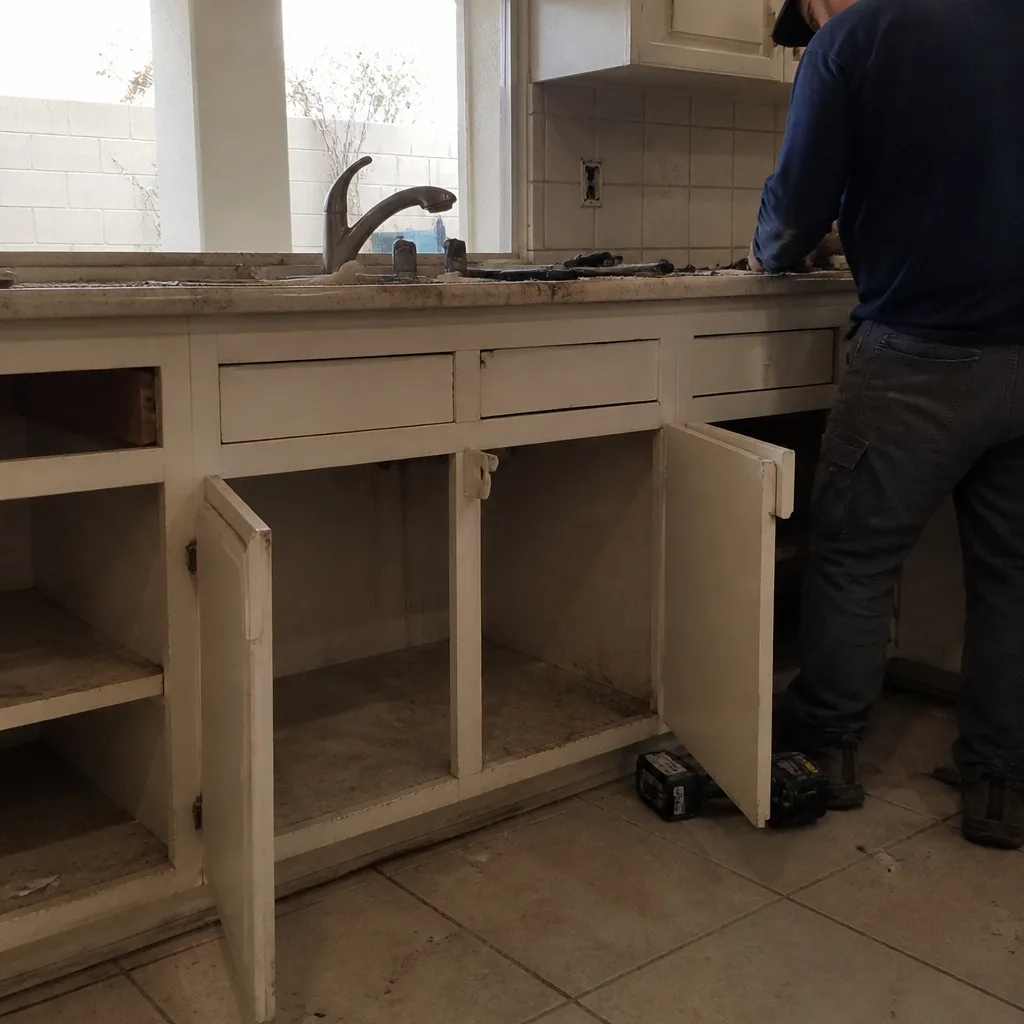 Before
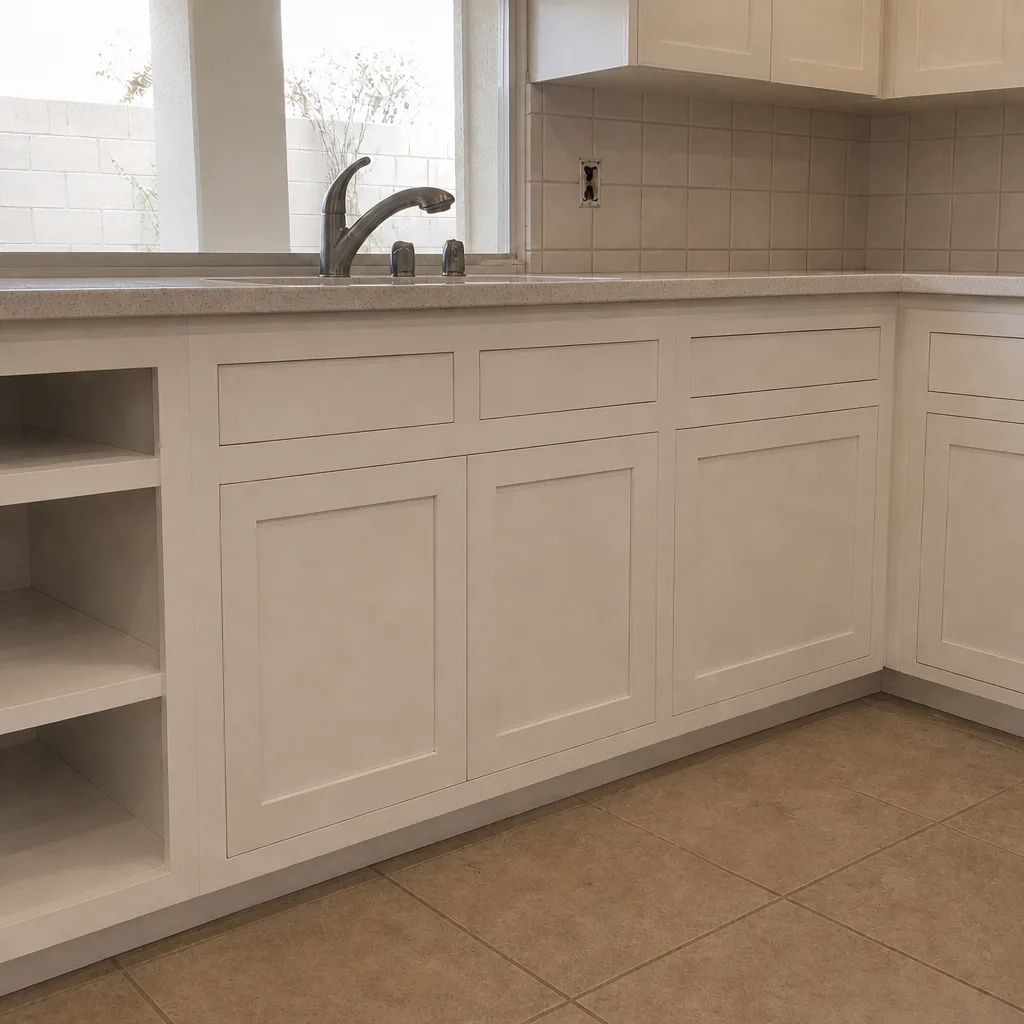 After
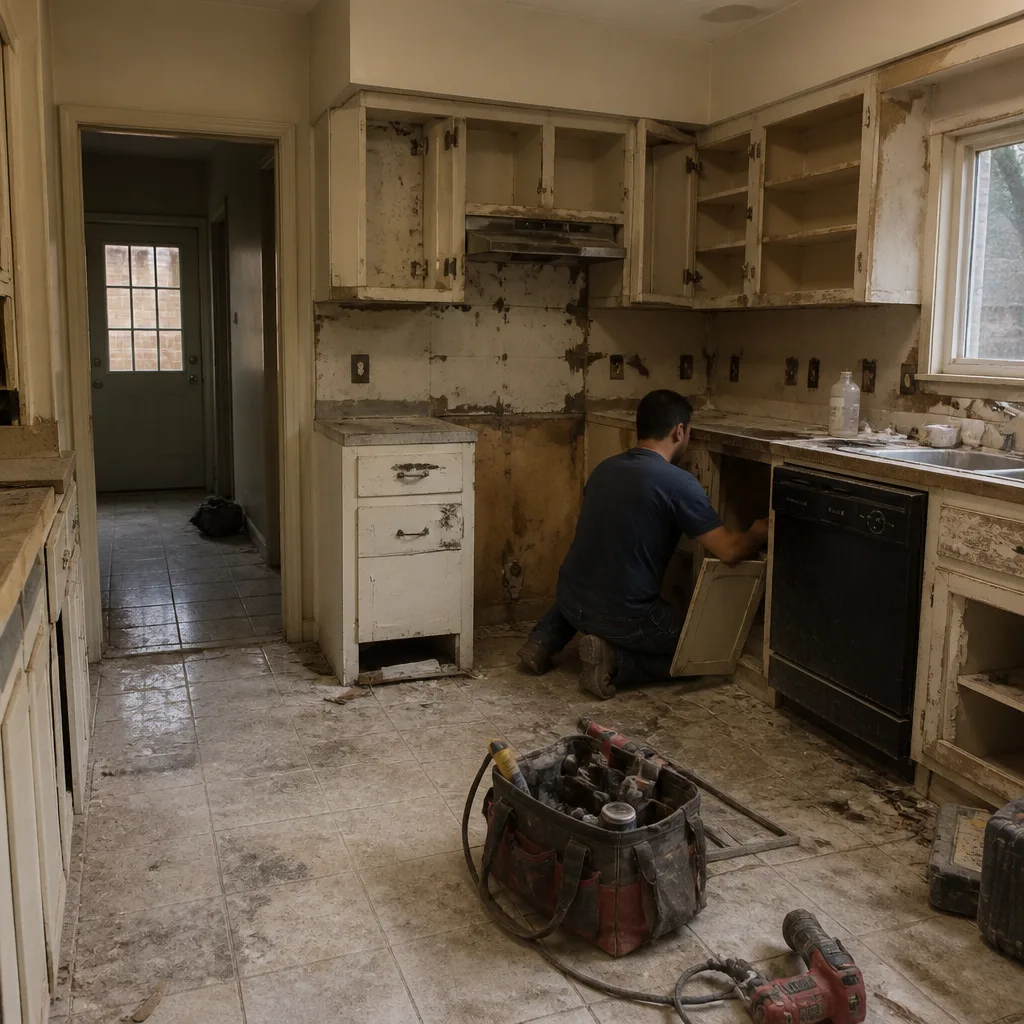 Before
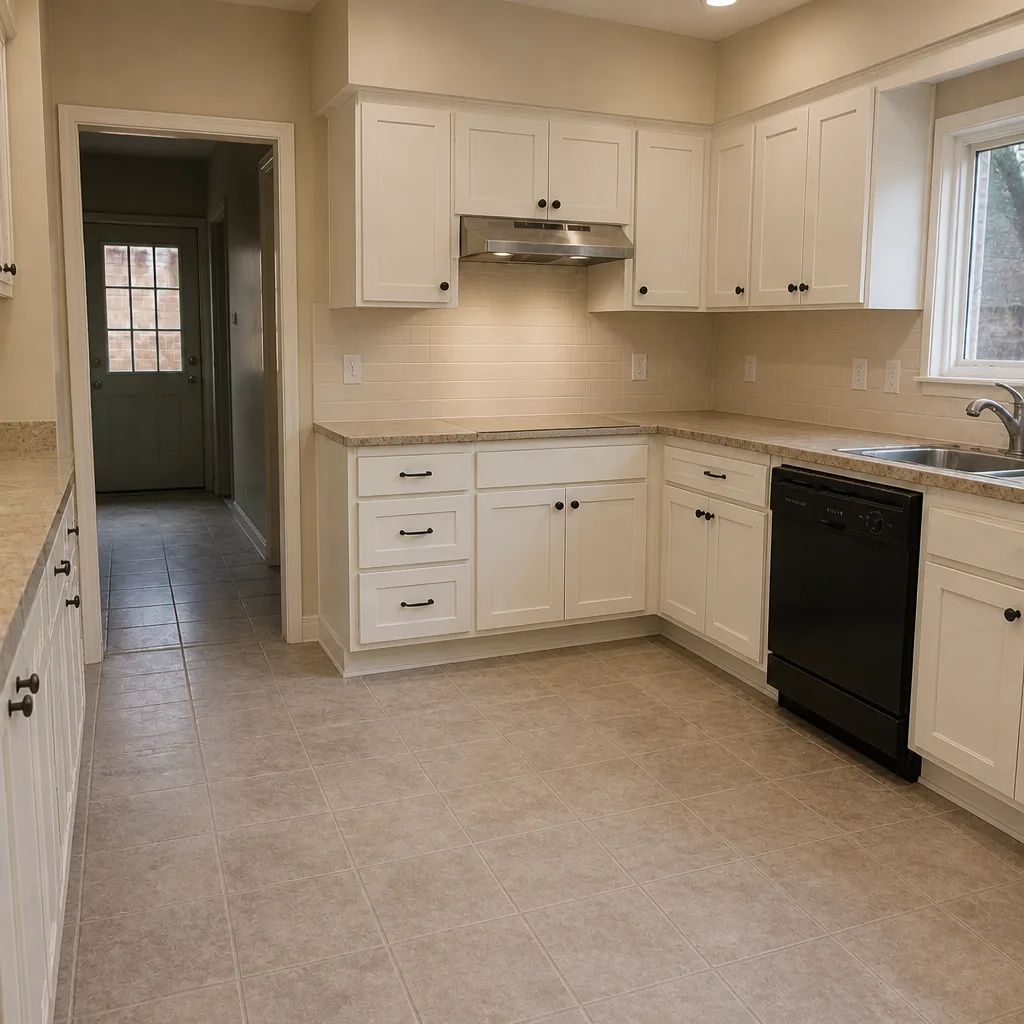 After
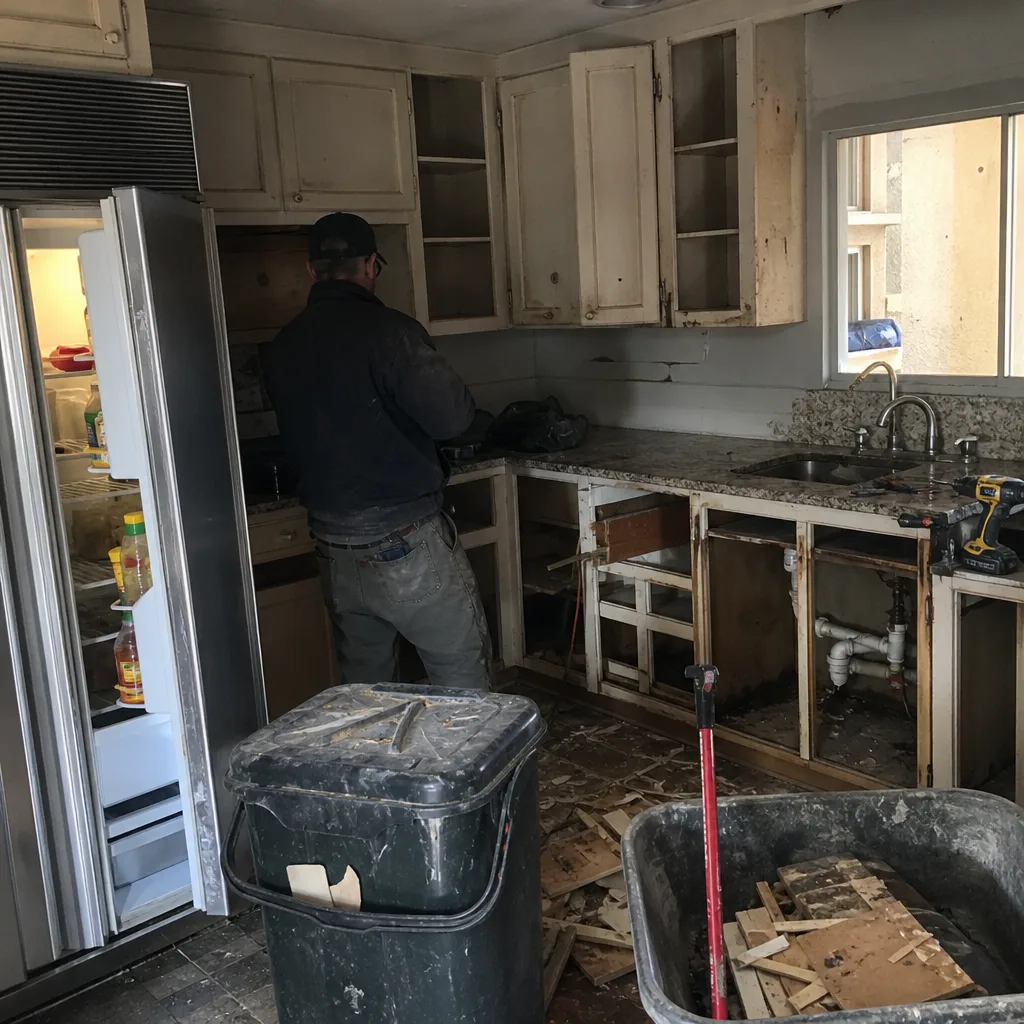 Before
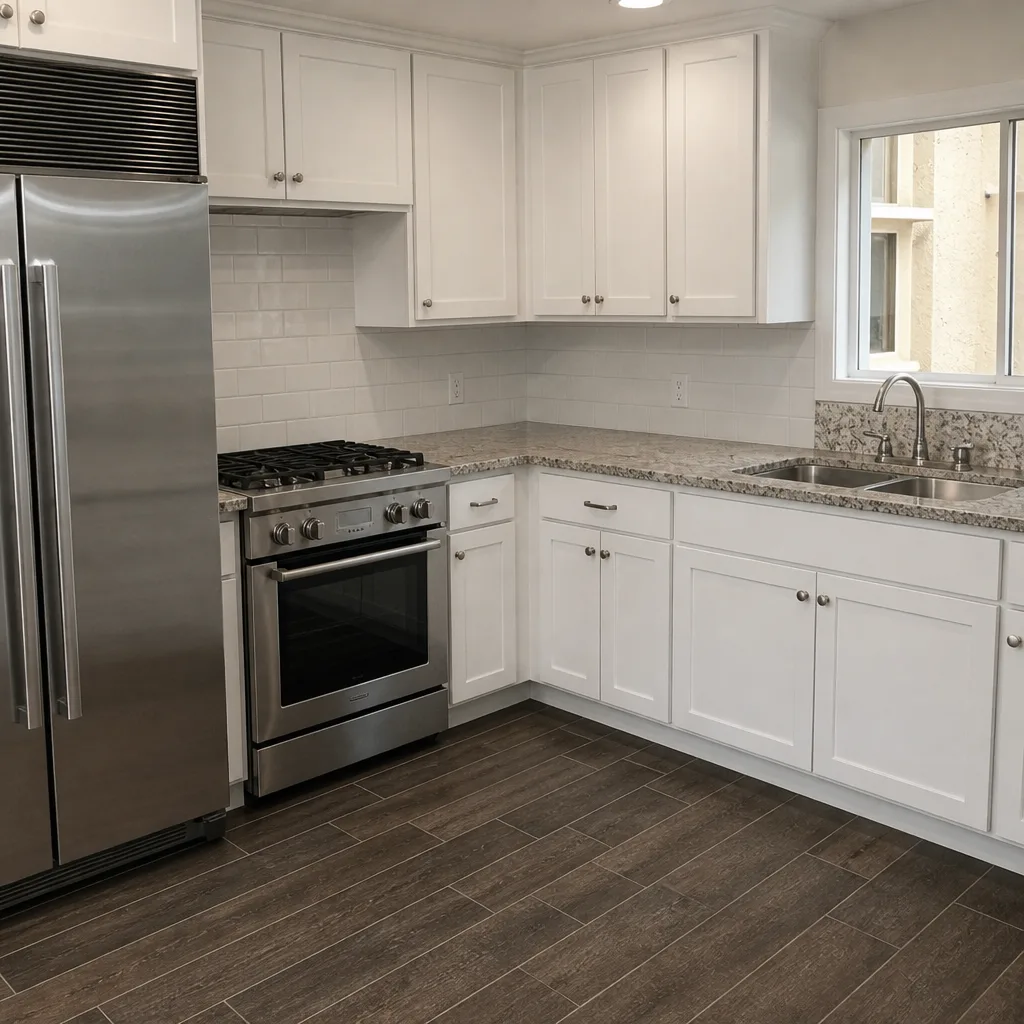 After
Assembling a Kitchen Emergency Kit Before Demolition
A five-minute kit at the start saves an hour of scrambling later. Ours is nothing fancy, and it lives in the garage until the project finishes.
- Water: two large towels, a bucket, and a wet/dry shop vacuum.
- Water controls: a labeled map of every shutoff in the house, taped inside a cabinet door.
- Power: a flashlight, extra batteries, and a phone charger that doesn’t depend on the kitchen outlets.
- Protection: a plastic tarp and painter’s tape for a quick cover over exposed areas.
- Documentation: the phone folder of pre-remodel photos, the COI, and your contractor’s emergency contact.
- Contact list: the contractor, your insurer’s claims line, and any plumber or electrician you’d call if something fails.
Print the contact list. A phone with a dead battery isn’t a plan.
Common Mistakes to Avoid
- Skipping the pre-remodel photos. A claim without a “before” photo can turn into a “pre-existing damage” dispute. Take the photos the day before demolition and back them up.
- Assuming the contractor’s insurance covers the whole project. Policies have expiration dates and renewal gaps. Verify dates, call the insurer, and calendar a re-check.
- Storing premium materials in the open. KraftMaid and Wellborn cartons in the driveway or Silestone slabs leaning against a wall are vulnerable to theft, damage, and warping. Stage them in a closed space.
- Not teaching the shutoff. Every household member should be able to find the main water shutoff in the dark. Do the walkthrough once, together.
- Forgetting surge protection before reconnection. The appliances are most vulnerable the moment they’re reconnected. Have the electrician confirm protection first.
- Letting monsoon season arrive without a response plan. Summer storms in Summerlin are predictable in season even when they aren’t predictable in timing. Have the tarp and bucket ready.
- Hiring separate vendors with no coordination. Cabinets arriving before the plumbing is done, or countertops templated before cabinets are level, creates gaps that no single insurer wants to cover. Keeping cabinets, countertops, and full scope with one kitchen specialist avoids that.
When to Call a Professional
Some of this guide is homeowner work: photographing, labeling shutoffs, verifying insurance, setting up the emergency kit. But several things in a remodel absolutely require a professional, and trying to handle them yourself is where projects go wrong. Call a professional if water is appearing anywhere it shouldn’t, if an outlet or breaker is acting erratically, if a storm has forced water into an open wall cavity, or if the documentation for a claim isn’t ready when a loss happens. Call us if your contractor’s insurance certificate doesn’t cover your project dates or if the paperwork feels unclear.
Kitchen Remodeling Summerlin offers free estimates in Summerlin – call (866) 655-6132. We answer 24/7. Fast dispatch from 7am to 7pm, Sunday through Friday. Our technicians have up to 10 years of experience, and we work exclusively with brands you can look up, compare, and hold to a warranty standard.
Frequently Asked Questions
In most cases, yes, but the coverage depends on the type of damage and the documentation you can produce. A storm or plumbing failure that damages your home during an active remodel is generally treated like any covered loss, but the adjuster will want proof that the damage was new. That’s why the pre-demolition photos and a shared documentation folder matter. Call (866) 655-6132 for an exact quote – estimates are free.
A current Certificate of Insurance with coverage dates that span the entire project, proof of workers’ compensation coverage or an exemption, and additional insured language. Then call the insurer printed on the certificate to verify the policy is active. Ask your own homeowner’s carrier whether they require any notice when remodeling begins. Call (866) 655-6132 for an exact quote – estimates are free.
Store everything in a closed, dry space out of street view, cover quartz slabs flat rather than leaning, and photograph each delivery as it’s staged. Never leave KraftMaid or Wellborn cartons in a driveway overnight. If you’re planning storage space and want to talk through the staging sequence, call (866) 655-6132 for an exact quote – estimates are free.
It’s typically near the street at the meter or at the point where the main line enters the house, and the exact location varies by home. During a remodel, plumbing lines are open and capped, and a slow leak at a weak connection can run for hours. Every adult in the house should physically turn it once before plumbing work starts. Call (866) 655-6132 for an exact quote – estimates are free.
Lightning-driven power surges, wind-driven rain entering open wall cavities, and municipal water pressure shifts during summer demand peaks. Each is manageable with preparation: surge protection before appliance reconnection, a tarp and bucket on hand, and a regular check of connections. If a storm has already caused moisture intrusion, call (866) 655-6132 for an exact quote – estimates are free.
No – the written estimate sets the price, and our line-item quotes document each product and scope detail before demolition begins. If an unexpected condition appears once a wall is opened, we document it and discuss it with you before any work continues. Call (866) 655-6132 for an exact quote – estimates are free.
The Bottom Line
The most prepared Summerlin homeowners treat a kitchen remodel as a project with two parallel tracks: the build you’re paying for, and the interim weeks you’re managing yourself. Document the existing conditions before demolition. Verify the contractor’s insurance dates. Secure materials in closed storage. Teach the whole household the main water shutoff. Confirm surge protection before anything is reconnected. And have a storm response kit ready before the summer season. None of it is complicated, and all of it is much easier to do before the first wall opens than after something goes wrong. If you want a kitchen specialist who plans for the interim as carefully as the finished result, call us.
Call (866) 655-6132 for a free estimate. We answer 24/7. Fast dispatch from 7am to 7pm, Sunday through Friday. Choose from three leading quartz lines – we’ll show you how they differ, not just push one. KraftMaid or Wellborn: two premium cabinet lines, one installation team who knows both. No generalist guesswork – just kitchens, done with materials that have a name behind them.
Written by the team at Kitchen Remodeling Summerlin.