
Last updated November 16, 2026
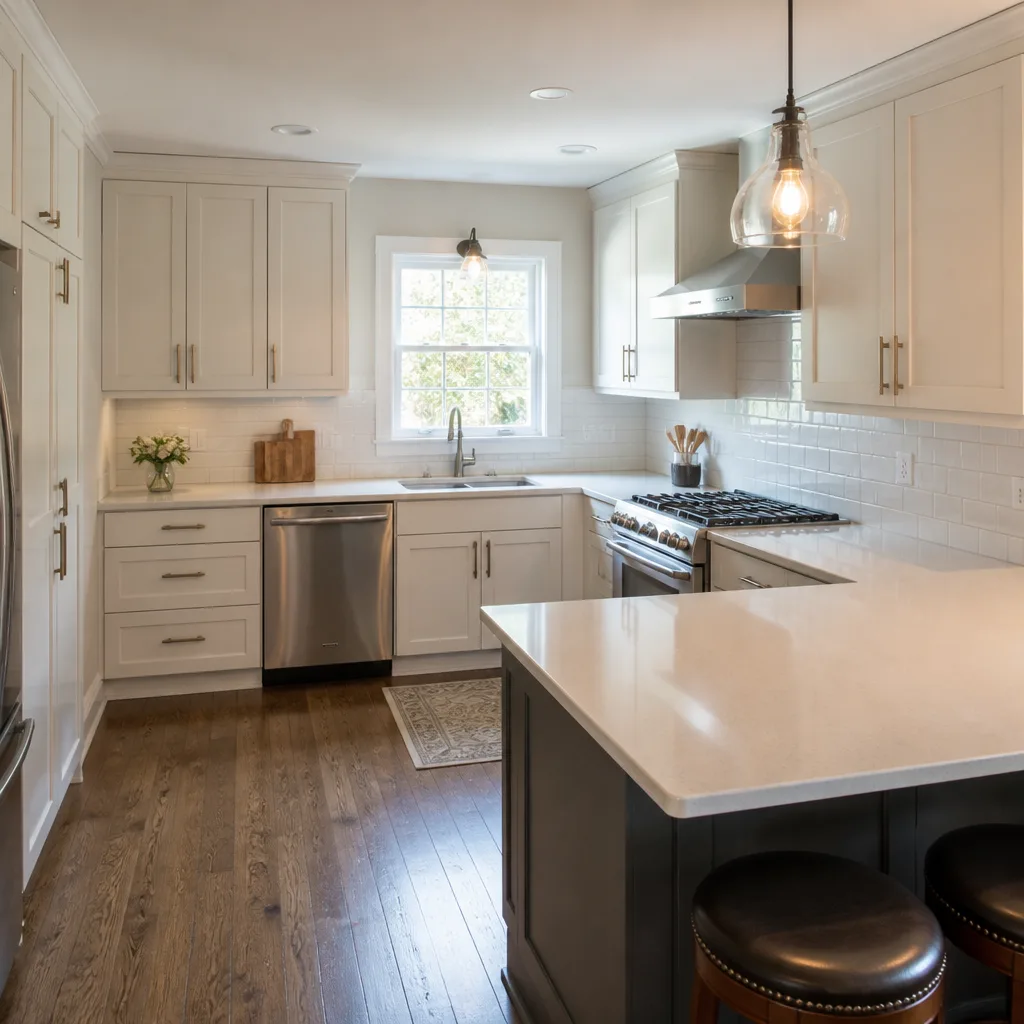 Shaker
 Modern flat-panel
 Two-tone cabinets
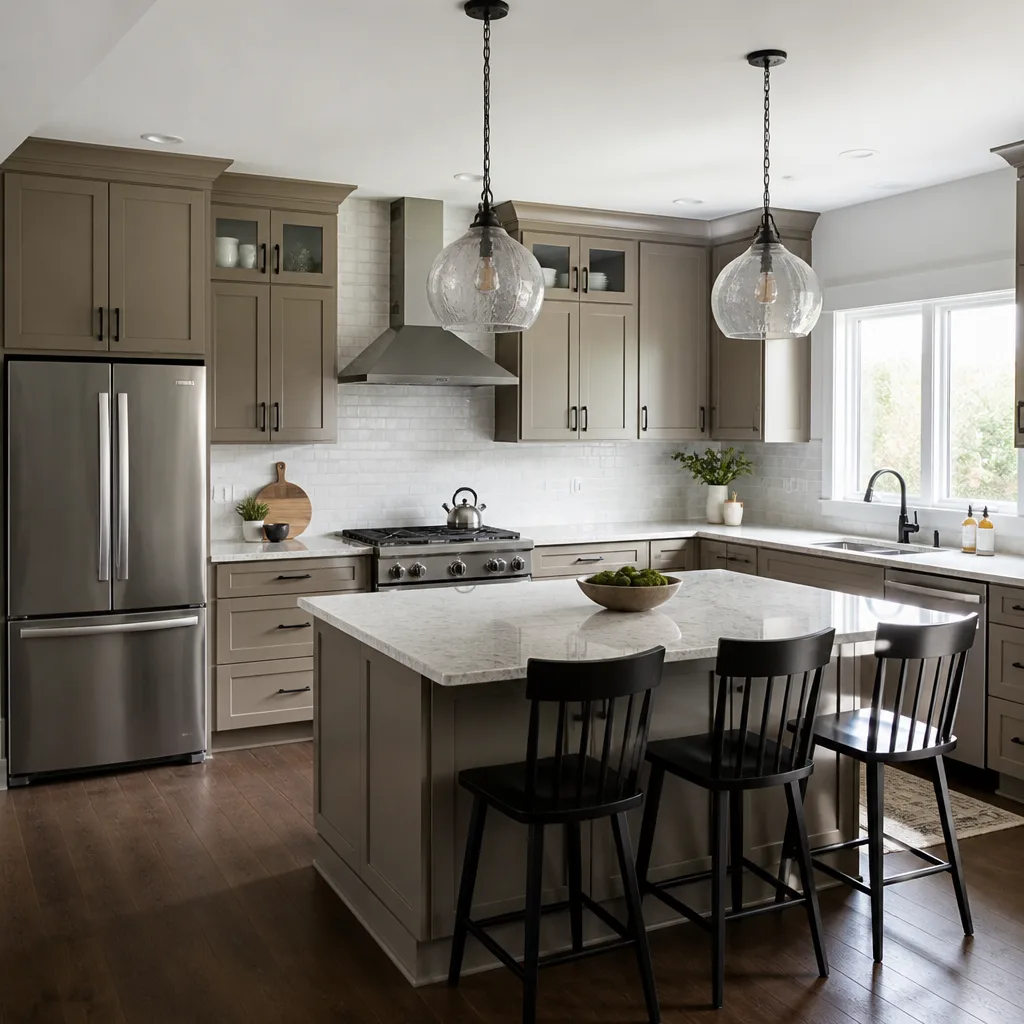 KraftMaid
 Cambria quartz
 Butcher block
 Open shelving
Free design consultation - KraftMaid and Wellborn cabinet lines, Cambria and Silestone surfaces, and every tier from refacing to full custom laid out side by side
Kitchen Remodeling Warning Signs: A Summerlin Homeowner’s Reference Guide
A cabinet door that’s slightly out of alignment isn’t always a hinge issue. In some cases it’s the first visible symptom of subfloor movement or improper installation that, left unaddressed, will eventually affect countertop seams and the plumbing connections underneath them. Most Summerlin homeowners assume a warn kitchen means it’s time for a cosmetic refresh. Often it means something more specific, and catching it early is what keeps a modest repair from becoming an open-wall project. This guide covers the signals premium kitchens send before real damage sets in, and how to tell a Saturday fix from something that needs a permit and a trained eye.
Quick Answer
The main warning signs that a Summerlin kitchen needs professional attention are cabinet doors drifting out of alignment, drawers that rack or stick, hairline cracks near a sink cutout, countertop seams that lift, discoloration patterns that spread from the substrate up, mineral buildup on fixtures, and a range hood that no longer clears smoke and grease. Each of these points to a specific system failing underneath the finish. Read them early and you’re looking at targeted repairs; let them compound and you’re looking at a full remodel. Either way, a free estimate tells you which one you’re facing.
Styles & brands we work with
- Shaker
- Modern flat-panel
- Two-tone cabinets
- KraftMaid
- Cambria quartz
- Butcher block
- Open shelving
Table of Contents
- Cabinet Warning Signs: Installation Problems vs. Normal Settling
- Countertop Signals Specific to Quartz and Natural Stone
- Plumbing Warnings Unique to Summerlin Kitchens
- Ventilation Red Flags in a Dusty Desert Environment
- DIY Fix vs. Permit and Open Walls: A Decision Framework
- Permits, Code, and What Summerlin Remodels Actually Require
- Common Mistakes to Avoid
- When to Call a Professional
Cabinet Warning Signs: Installation Problems vs. Normal Settling
Not every misaligned door is a crisis. New cabinets settle as a home’s framing adjusts to seasonal movement, and most cabinet lines allow for minor door adjustment in the first year. But some warning signs point to installation problems that won’t resolve on their own, and they’re worth reading correctly before you decide what kind of fix you need.
Alignment gaps at the corners. A sliver of light between two cabinet faces is normal if it appears evenly and closes with a light push. A gap that’s wider at the top than the bottom, or that reappears after you’ve adjusted the hinge, usually means the cabinet box wasn’t set plumb. In Summerlin’s dry air, units installed on a slightly out-of-level surface tend to telegraph that error faster than in a more humid climate, because the doors don’t swell enough to hide it.
Drawers that rack or stick. Racking is when a drawer pulls out at an angle instead of square. It’s one of the clearest installation signals because the slide mechanism itself rarely causes it. Either the cabinet box is out of square, or the slides were mounted proud of the frame. A drawer that binds only at a certain depth often indicates the box has twisted since it went in, which can point to subfloor movement or inadequate shimming behind the cabinet run.
Finish bubbling or lifting. This is the sign to take most seriously. Moisture trapped behind a cabinet finish, or heat from a range pressed too close against the box, causes the laminate or painted surface to bubble. Bubbling near the range or the sink points to a ventilation or leak issue that’s working from the inside out. Bubbling along an entire cabinet face usually means a moisture source behind the wall.
What each signal tells you:
- Even gap that closes with a push: normal settling. Adjust the hinge and move on.
- Uneven gap that returns after adjustment: cabinet box out of plumb. Worth an inspection.
- Drawer racking that worsens over months: box out of square or subfloor movement.
- Finish bubbling near the sink or range: active moisture or heat problem.
- Finish bubbling along a full cabinet face: suspect the wall behind, not the cabinet.
When cabinet work turns out to be the answer, our cabinet installation work leans on two premium lines, KraftMaid and Wellborn, because having both available means you’re not locked into one manufacturer’s style or price tier.
Countertop Signals Specific to Quartz and Natural Stone
Quartz and natural stone are both durable, but they fail differently and each failure pattern tells you where to look. Quartz is engineered, so cracks tend to propagate from stress points like cutouts. Natural stone has its own grain, so where it cracks follows the stone’s structure. In either case, the countertop is usually the messenger, not the cause.
Hairline cracks near the sink cutout. The sink cutout is the highest-stress area of any countertop because it removes material from the middle of the slab and hangs a basin from the remaining edges. A hairline crack radiating from a corner of the cutout is almost always a sign of one of three things: the cutout was made too close to the edge, the slab wasn’t properly supported underneath, or the cabinet box supporting the sink has moved. All three are installation or structural issues, and none of them resolve by filling the crack with matching epoxy and hoping.
Lifting seams. A seam between two countertop pieces should read as a hairline, flush enough to run your hand across without catching. A seam that’s lifting, or that has a visible lip, usually means the substrate below it has shifted or swelled. Under a Summerlin kitchen window, where sun exposure is intense and the temperature swings between morning and afternoon are larger than they look, seams are the first joint to telegraph that movement.
Discoloration that spreads from the substrate up. Staining that originates along a seam or the back edge and creeps into the surface is the pattern to watch for. On quartz, most discoloration sits on the surface, so staining that originates from a seam or edge points to moisture or adhesive wicking up from beneath. On natural stone, discoloration that spreads from the bottom is a classic sign of a wet substrate or a plumbing weep working its way up.
Comparing quartz brands side by side is where a lot of homeowners get stuck. We work with Cambria, Silestone, and Caesarstone because three lines let us tell you honestly how they differ on warranty, stain resistance, and seam performance rather than steering you toward one because it’s the only slab on the floor. If everything you’ve read here sounds like more than a cosmetic issue, our kitchen remodeling scope covers the structural repair and the new countertop in one contract.
Plumbing Warnings Unique to Summerlin Kitchens
Summerlin’s water carries dissolved minerals, and that has consequences for the kitchen plumbing that a coastal homeowner would never see. The warning signs here are quieter than a burst pipe, but they’re just as worth reading early.
Mineral buildup that patterns like a pressure problem. White, chalky deposits on faucet aerators, on the spray head, and on the base of a Kohler or Moen faucet are normal in hard water. What’s not normal is buildup that appears faster in one location than another, or crust that reforms within weeks of being cleaned. That pattern often points to higher-than-average line pressure in the home, which accelerates mineral deposition and stresses the supply lines and valve seats behind the wall. A pressure reading from a qualified plumber is the definitive check, but a faucet that crusts over fast is the visible early signal.
Slow drains that suggest an original slope issue. A single slow drain is usually a local clog. Slow drains across the whole kitchen, or a kitchen drain that’s always been slow even when it’s clear, is a different story. In homes where the original rough-in was set with a shallow slope for the drain line, debris settles faster and clogs return more often because there isn’t enough grade to keep solids moving. This is worth knowing before you remodel, because a shallow-slope drain under a new sink is a far easier problem to address while the cabinets are out.
Water stains under the sink. A dark ring on the cabinet floor beneath the sink is the clearest sign of an active weep or a slow leak at the drain connection or the supply line. It’s also easy to misread as old staining. Test by touching the area after a day of normal use; if it’s cool or damp, there’s an active source.
Signs to check:
- Mineral crust reforming on a faucet within weeks of cleaning: check line pressure.
- Slow drain that persists after clearing: suspect original rough-in slope.
- Damp cabinet floor under the sink: active leak or drip at a connection.
- Water stains creeping up a cabinet interior panel: moisture from behind, not above.
Fixture specification matters here. We spec Kohler, Moen, and Blanco because those brands have established warranties and wide replacement-part availability, which means a faucet that eventually fails can be repaired rather than replaced along with the countertop.
Ventilation Red Flags in a Dusty Desert Environment
A range hood that doesn’t move air the way it should is an issue that compounds in Summerlin’s dust environment. Particulates suspended in the air combine with cooking grease to form a sticky film, and a hood that’s underperforming will pull that mixture straight into the cabinet run above and beside the range instead of exhausting it. Over enough years, cabinet interiors and the wall behind them get coated.
Signs your hood isn’t exhausting properly:
- Smoke or steam drifts toward the ceiling instead of being pulled into the hood.
- Grease film reappears on the cabinet doors above the range shortly after cleaning.
- The hood is loud but doesn’t seem to move much air – often a clogged filter or a blocked duct.
- Cooking odors linger in adjacent rooms long after the meal.
- Warm, greasy air blows back down when the hood is on, which can indicate a duct problem.
An undersized hood that’s quieter than the range is one of the most common issues in kitchens where a new range was installed without matching the ventilation. A professional-grade gas range needs a stronger hood than the original appliance it replaced, and if the hood wasn’t upgraded alongside it, the cabinet finish above is the first casualty. Dust in a desert climate makes that failure more visible: the film that builds up on cabinet faces is grease and particulate together, and it doesn’t wash off with ordinary cleaner once it’s set.
If the grease film on your Summerlin cabinets doesn’t respond to cleaning, and the hood sounds labored or moves little air, the next step is a ventilation assessment, not another round of scrubbing. This is a system problem, and it’s worth fixing before a cabinet refinish because it will simply recur.
DIY Fix vs. Permit and Open Walls: A Decision Framework
The most expensive mistake a homeowner can make is treating a structural warning as cosmetic. The second most expensive is treating a cosmetic warning as structural. Both happen, and both cost money. The framework below is the one we use when a homeowner walks us through a symptom list: does this need a screwdriver or does it need a permit?
Signs it’s likely a DIY-appropriate fix:
- A cabinet door that’s slightly off plane and closes with a light push – hinge adjustment.
- A single slow drain that clears with a plunger or a drain snake.
- Surface-level stain on a quartz countertop that lifts with a poultice.
- Mineral crust on a faucet aerator that clears with a diluted vinegar soak.
Signs it requires a professional, and likely a permit:
- Any cabinet box that’s out of plumb, or a drawer that racks after adjusting.
- Countertop cracks near a sink cutout, or a seam that lifts.
- Water stains that originate from behind a cabinet or wall.
- Drain slope issues that require opening the floor or wall to correct.
- Ventilation ductwork that needs rerouting, or a hood upgrade that changes the exhaust path.
- Anything that touches gas supply, electrical circuits serving the range, or the sink supply lines inside a wall.
When in doubt on the second list, ask three questions. Does the fix require touching a gas line or a dedicated appliance circuit? Does it require opening a wall or floor? Does it involve the sink rough-in? If any answer is yes, the work needs a permit in most jurisdictions, and it needs a trained professional. Most cities require a permit for kitchen work that involves plumbing, electrical, or gas changes, so ask your city’s building department about the specific scope before any work starts. If the answer is no to all three, you’re probably looking at a genuine cosmetic fix, and you have our permission to fix it yourself.
Permits, Code, and What Summerlin Remodels Actually Require
Permits exist to protect you, and they’re also the point where a lot of kitchens get a hidden scope creep. The permit application is the moment a homeowner and a contractor sit down and agree on what’s actually being done. When that step gets skipped, the work that was “just a cabinet swap” ends up with electrical and plumbing changes that were never inspected.
In practice, most Summerlin kitchen work falls into three permit categories:
- Cosmetic scope. Refinishing cabinet faces, replacing doors and drawer fronts, swapping a faucet or a light fixture that’s a direct replacement on an existing circuit. Usually no permit required.
- Like-for-like replacement. New cabinets going back into the same footprint with no plumbing or electrical changes. Some jurisdictions require a permit, some don’t. Ask before you assume.
- Changes to systems. Moving a sink, adding an outlet or moving a circuit, changing a range from electric to gas, adding a dishwasher where there wasn’t one. Permits and inspections are required for all of these in most jurisdictions.
The gap between categories two and three is where we see the most avoidable cost. A homeowner who plans the full scope up front, including the sink line and the electrical, gets one permit and one inspection pass. A homeowner who discovers the plumbing issue after the cabinets are ordered gets two projects, two sets of visits, and a longer schedule. We coordinate cabinets, countertops, and full kitchen scope under one contract specifically because this scheduling gap is where things go wrong. If your estimate says “we’ll figure out the plumbing later,” that’s a sign to ask more questions.
Before you sign anything, ask three things: which permits are being pulled and by whom, who inspects the work, and what happens if the inspection finds a problem behind the wall. A contractor who can answer those questions calmly has done this before. One who can’t is a warning sign in itself.
Common Mistakes to Avoid
- Treating a lifting countertop seam as a cosmetic flaw. A seam that’s lifted is almost always reporting substrate movement underneath. Epoxy-filling it without addressing the cause just hides the message for a season or two, and by then the movement has reached the cabinet box.
- Hiring separate vendors for cabinets, countertops, and plumbing. This is the single most common cause of schedule gaps and finger-pointing in Summerlin kitchens. When the cabinet installer blames the countertop fabricator and the fabricator blames the plumber, you’re the one paying for the second visit.
- Choosing cabinets before checking the walls behind them. A KraftMaid or Wellborn line is only as good as the wall it’s mounted to. If the wall is out of plumb, the cabinet doors will drift no matter how premium the box. Have the wall checked before the order is placed.
- Assuming the range hood that came with the house is adequate. High-output gas ranges in summerlin kitchens often need more ventilation than the original builder installed. If the hood was never upgraded alongside the range, grease and dust film will build up in the cabinet run above.
- Skipping the permit because “it’s just cabinets.” If the project moves a sink, an outlet, or a gas line, it isn’t just cabinets. The permit is the record that proves to a future buyer that the work was done to code, and it’s what your insurer will look for if a claim happens.
- Assuming hard-water crust is just cosmetic. Fast-reforming mineral buildup on a faucet can indicate line pressure that’s stressing the supply lines behind the wall. By the time the pressure shows up as a leak, the drywall is already wet.
- Ignoring the drawer that racks. A racking drawer is usually the earliest visible signal of subfloor or cabinet box movement. It’s a small, inexpensive fix at that stage. It becomes a full remodel if it progresses to a cracked countertop and a leaking sink line.
When to Call a Professional
Call when a warning sign falls into the structural category, not the cosmetic one. Countertop cracks near a sink cutout, seams that lift, cabinet boxes out of plumb, drawer racking that worsens after adjustment, water stains that originate under the sink or behind a wall, and ventilation problems that don’t respond to a filter change all merit an inspection. Call before you buy a replacement part, not after, because the wrong part doesn’t fix an installation problem. And call before you schedule any work that moves a sink, an outlet, or a gas line, because that work needs a permit and a trained professional, not a weekend project. Our technicians have up to 10 years of experience and can tell you within one visit whether your warning sign is a hinge or a wall. Kitchen Remodeling Summerlin offers free estimates in Summerlin – call (866) 655-6132. We answer 24/7. Fast dispatch from 7am to 7pm, Sunday through Friday.
See the difference
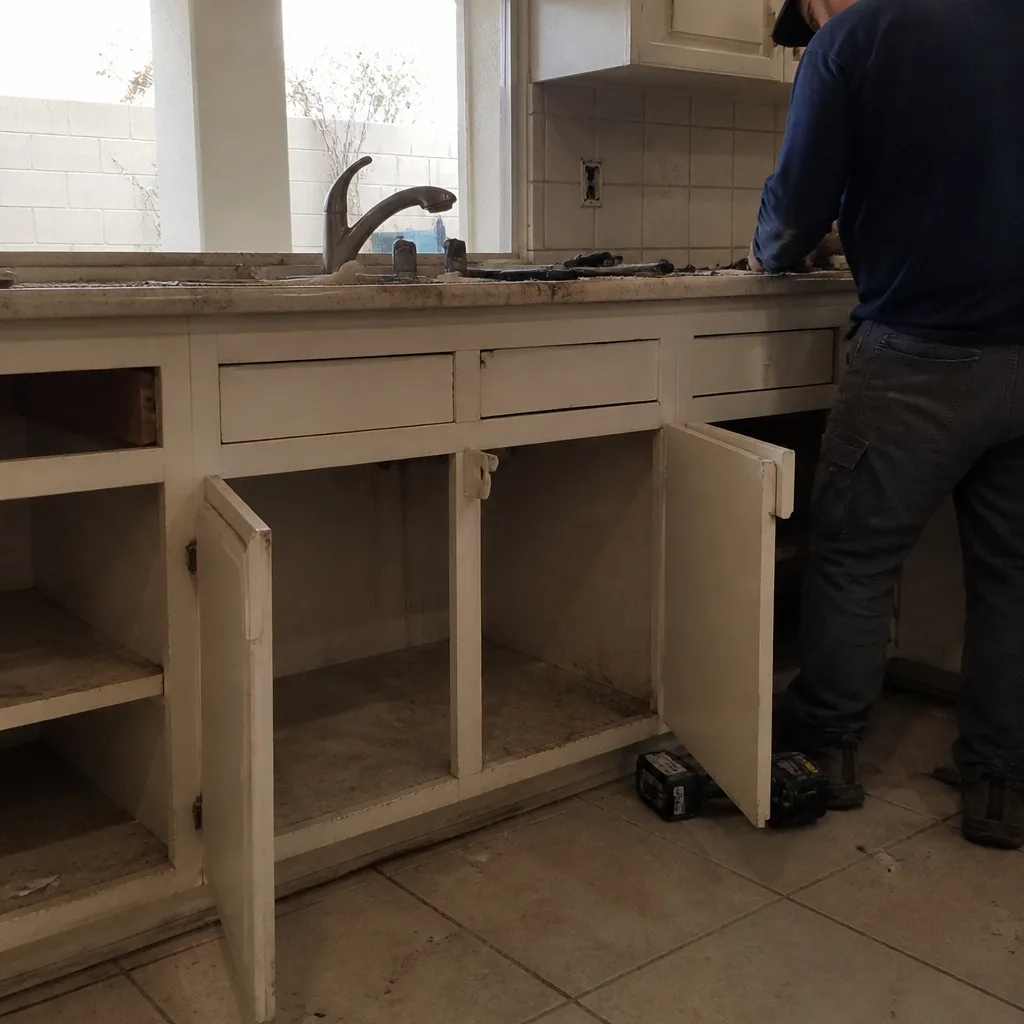 Before
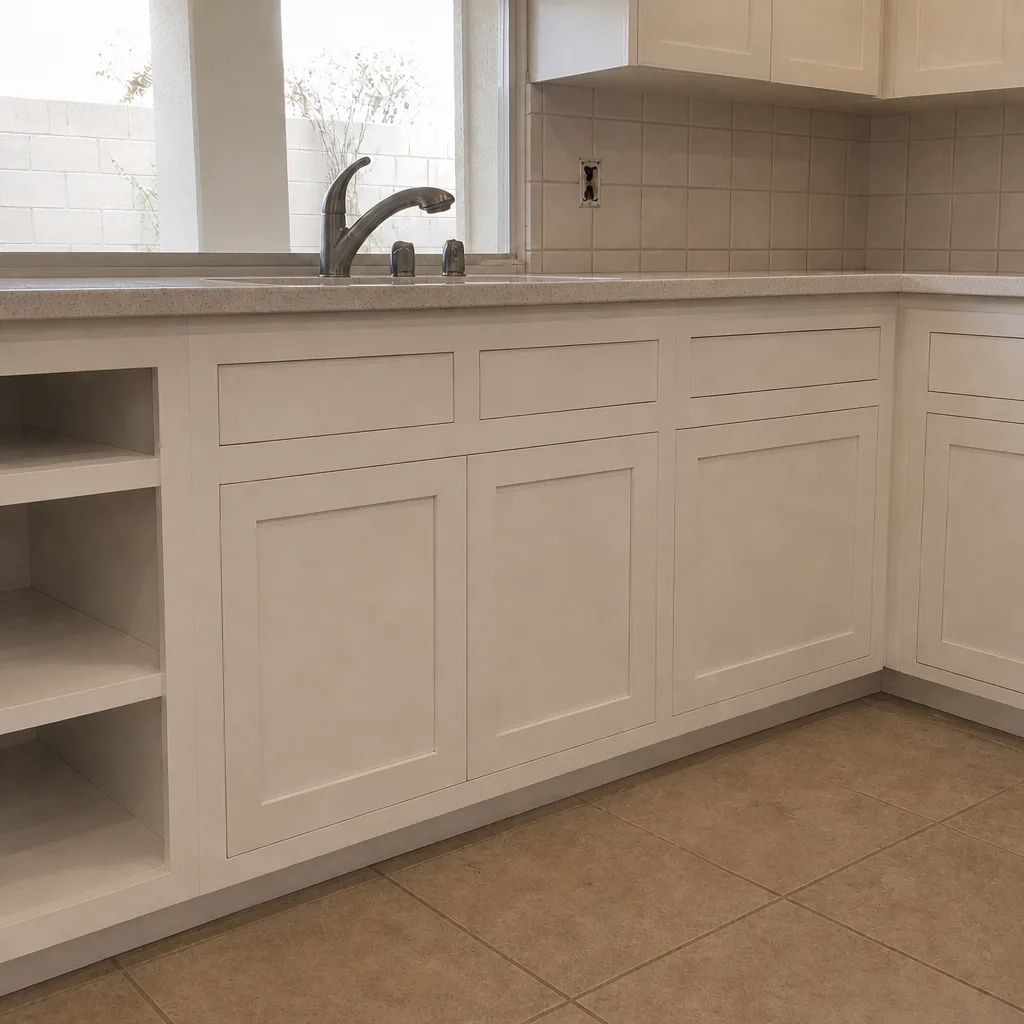 After
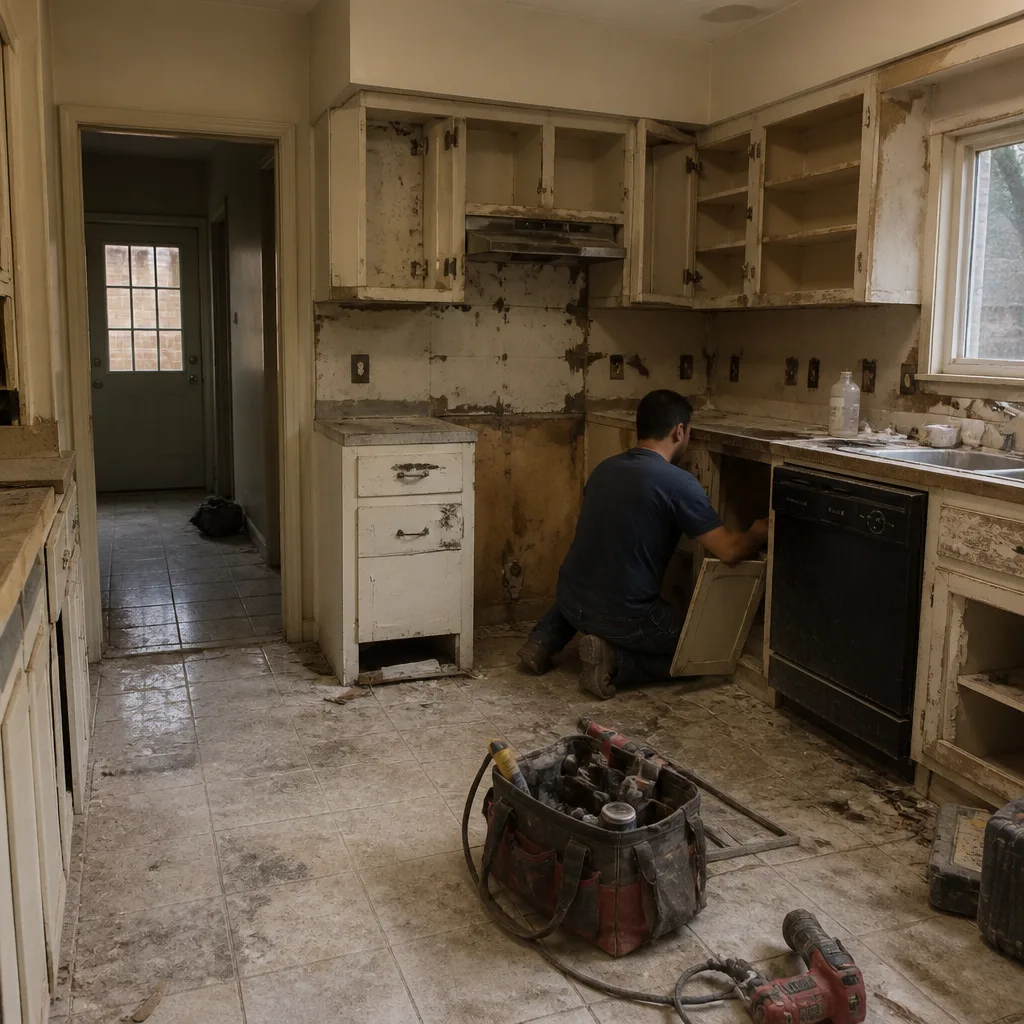 Before
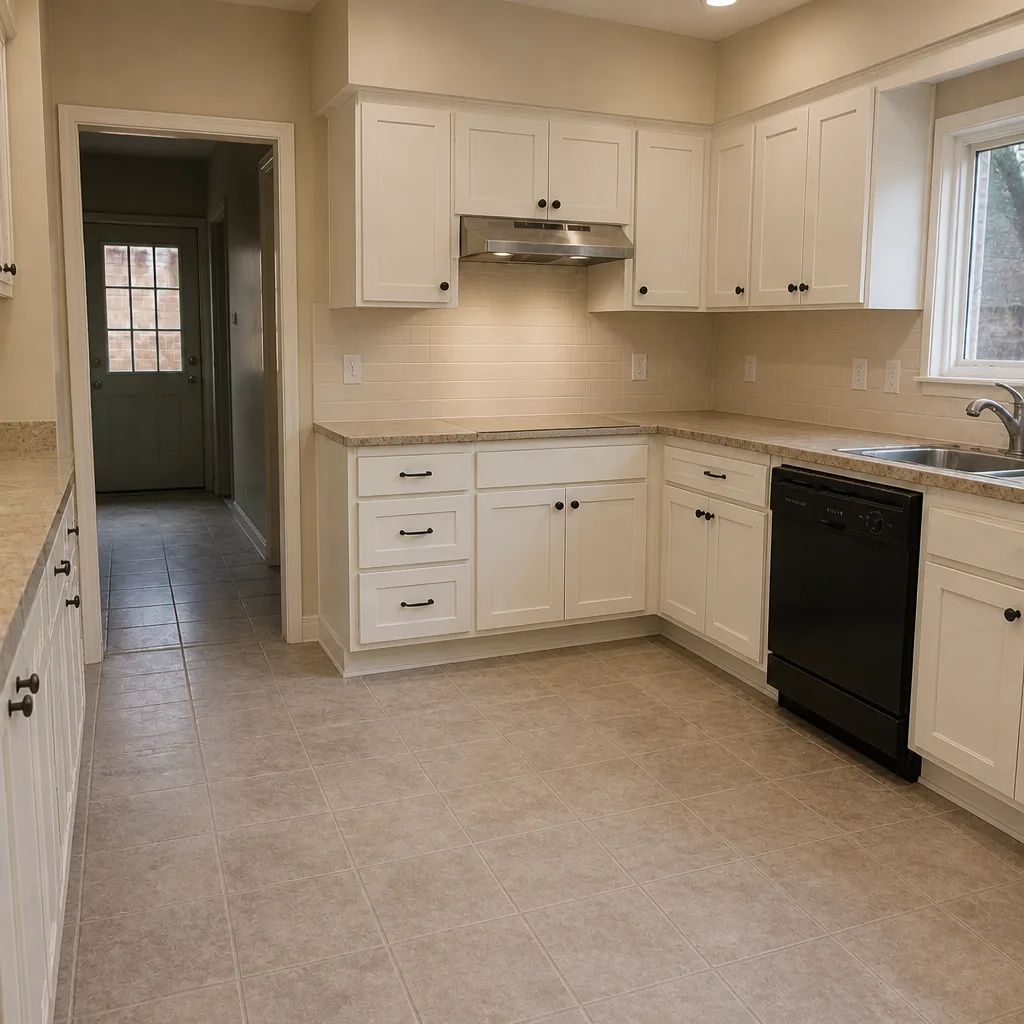 After
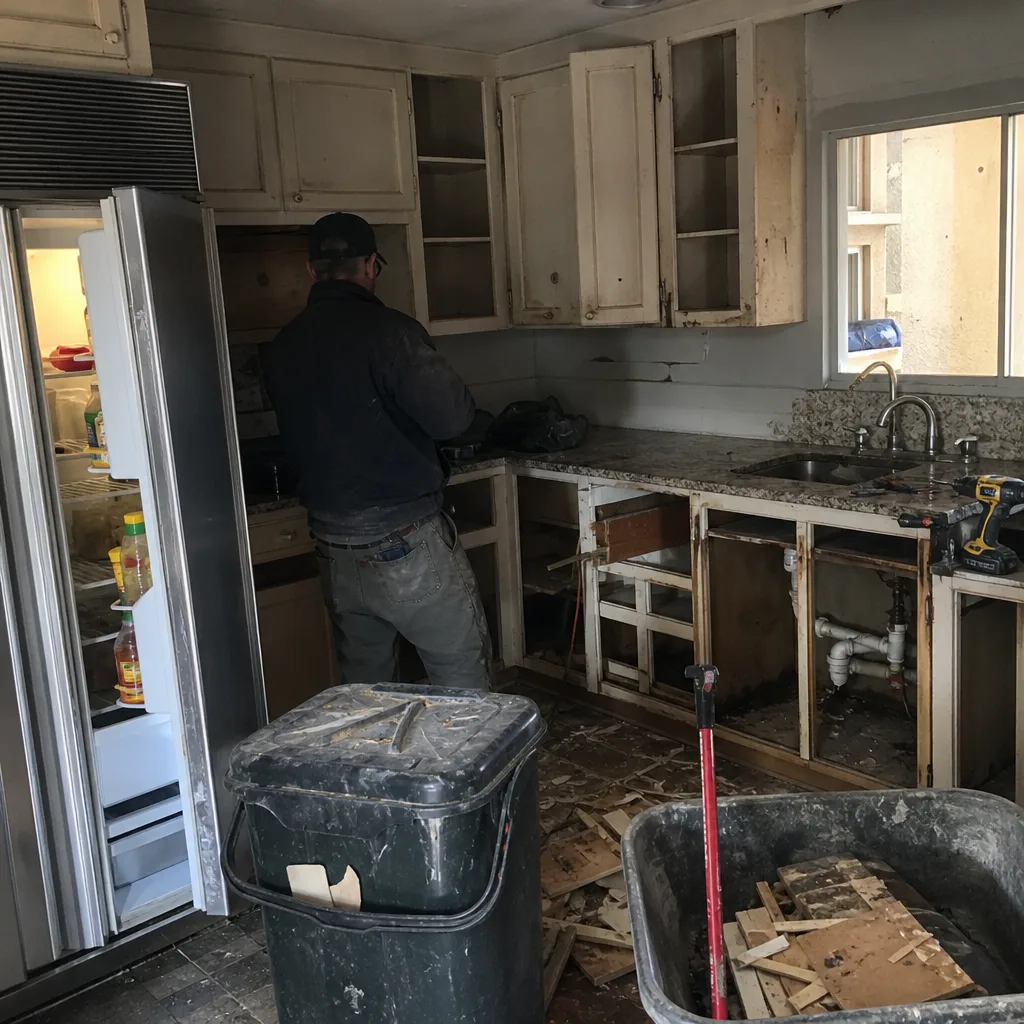 Before
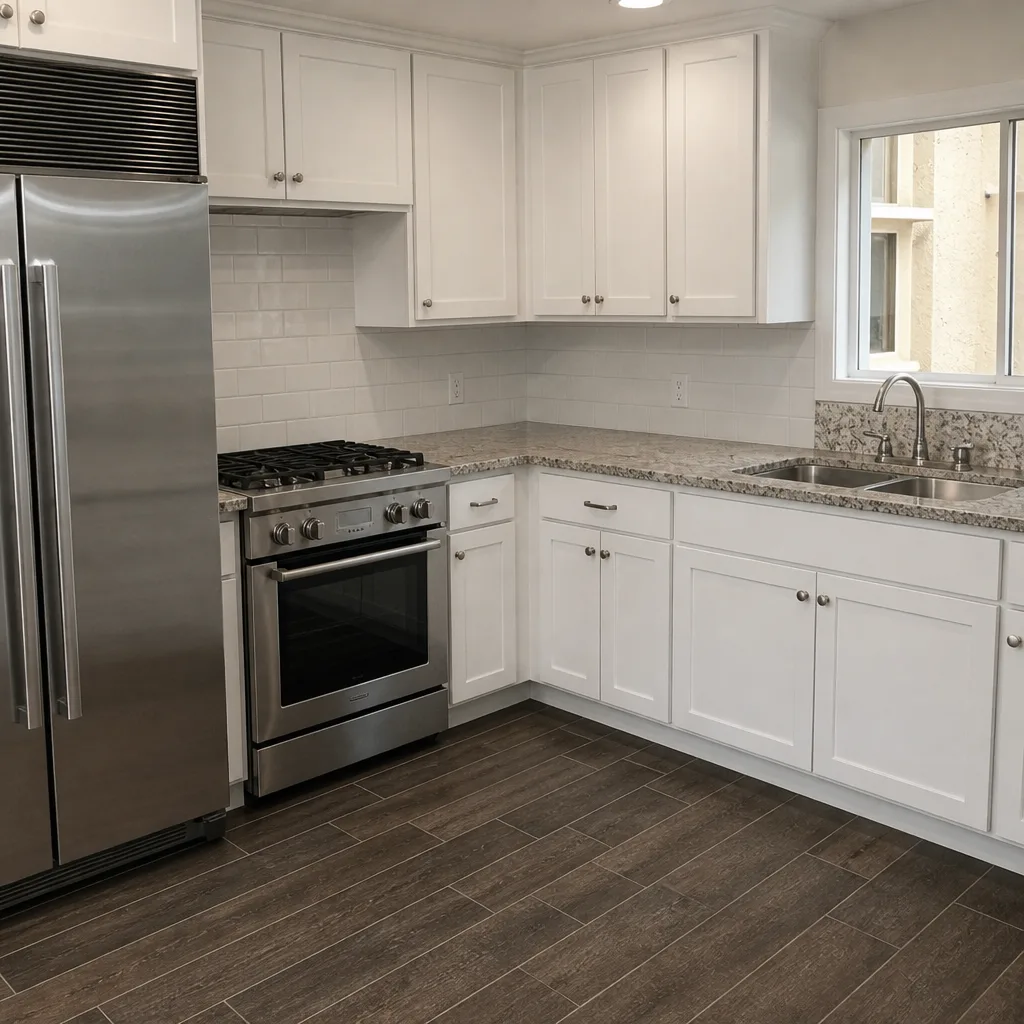 After
Frequently Asked Questions
Finish bubbling along a full cabinet face is the most serious warning sign because it usually means moisture is coming from behind the wall, not from a spill. Bubbling localized near the sink or range points to a leak or a ventilation problem; bubbling across a whole face points to the wall itself. Either way, it deserves an inspection before the cabinet refinish, not after. Call (866) 655-6132 for a free estimate on the repair.
A settling issue closes with a light push and doesn’t return once you adjust the hinge; an installation problem reappears within weeks. The tell is the pattern: an even gap that closes is normal, an uneven gap that returns is a cabinet box that wasn’t set plumb. In Summerlin’s dry air, the difference shows up faster because the doors don’t swell enough to hide a mounting error. A free estimate will confirm which you’re facing.
Replace the affected section, and address the cause underneath it. A crack that originates from a sink cutout corner usually means the cutout was made too close to the edge, the slab wasn’t supported underneath, or the cabinet box has moved. Filling the crack without fixing the substrate just delays the failure. We work with Cambria, Silestone, and Caesarstone so you can compare replacement options honestly before deciding.
Sometimes. Like-for-like cabinet replacement with no plumbing, electrical, or gas changes may or may not require a permit, so ask your city’s building department about the specific scope. Any project that moves a sink, adds an outlet, changes a range from electric to gas, or adds a dishwasher requires a permit and inspection in most jurisdictions. Ask before the cabinet order is placed, not after.
Your range hood isn’t exhausting properly, so grease and dust from Summerlin’s air are settling on the cabinet faces instead of being pulled out of the kitchen. Cleaning the faces without fixing the hood just removes the symptom for a week. Signs include smoke drifting toward the ceiling, a hood that’s loud but moves little air, and cooking odors that linger. If the film doesn’t respond to cleaning, the next step is a ventilation assessment.
Try a plunger or a drain snake first. If the drain clears, it was a local clog and you’re done. If the drain has always been slow even when clean, the original rough-in slope may be too shallow, and that’s a plumbing issue, not a drain-cleaning one. In Summerlin, where the original slab was often poured decades ago, a shallow-slope drain is worth addressing while the cabinets are out. Call (866) 655-6132 for an exact quote on the assessment; estimates are free.
The Bottom Line
Most kitchen problems announce themselves early, and the difference between a targeted repair and a full remodel is usually how fast the homeowner reads the signal. Reappearing cabinet misalignment means plumb, not hinge. A crack from the sink cutout means support, not sealant. Fast mineral crust means line pressure, not bad luck with hard water. Grease film that won’t clean off means the hood, not the cleaner. In every case, the fix is specific and the early version costs less than the late one. Our Kitchen Remodeling Summerlin work stays focused on kitchens only, which is why every recommendation we make is specific to how kitchens actually get used, not generalized from other trades. If you’re in Summerlin and any warning sign in this guide rings true, call (866) 655-6132 for a free estimate. We answer 24/7. Fast dispatch from 7am to 7pm, Sunday through Friday.
Written by the team at Kitchen Remodeling Summerlin.