
Last updated November 16, 2026
 Shaker
 Modern flat-panel
 Two-tone cabinets
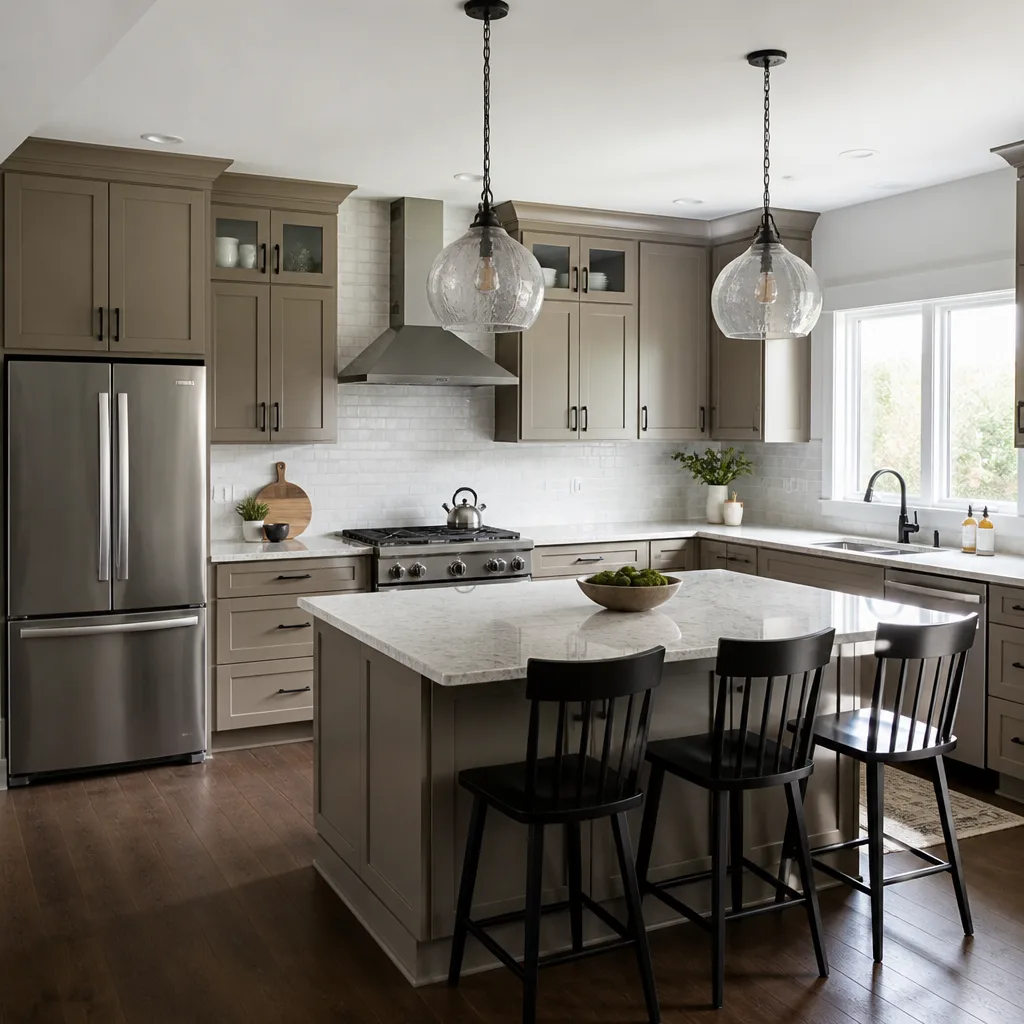 KraftMaid
 Cambria quartz
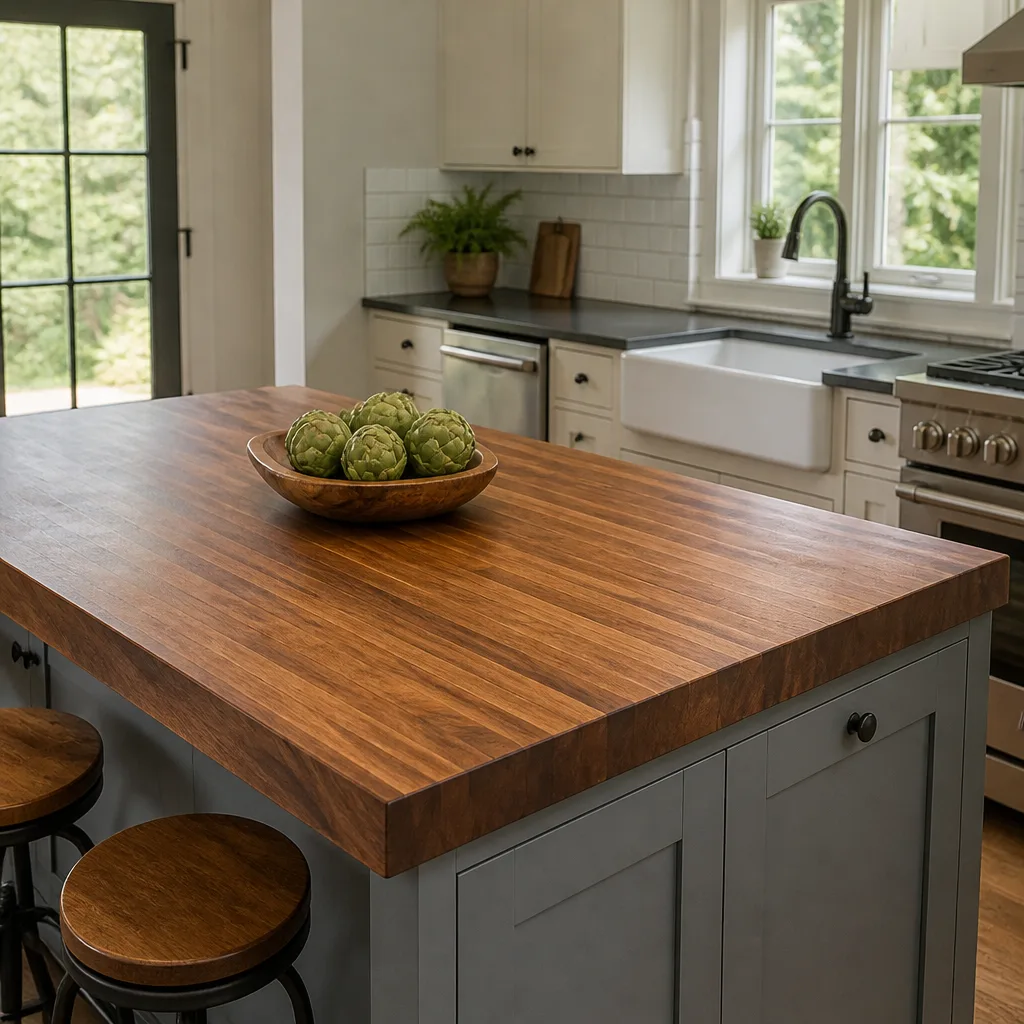 Butcher block
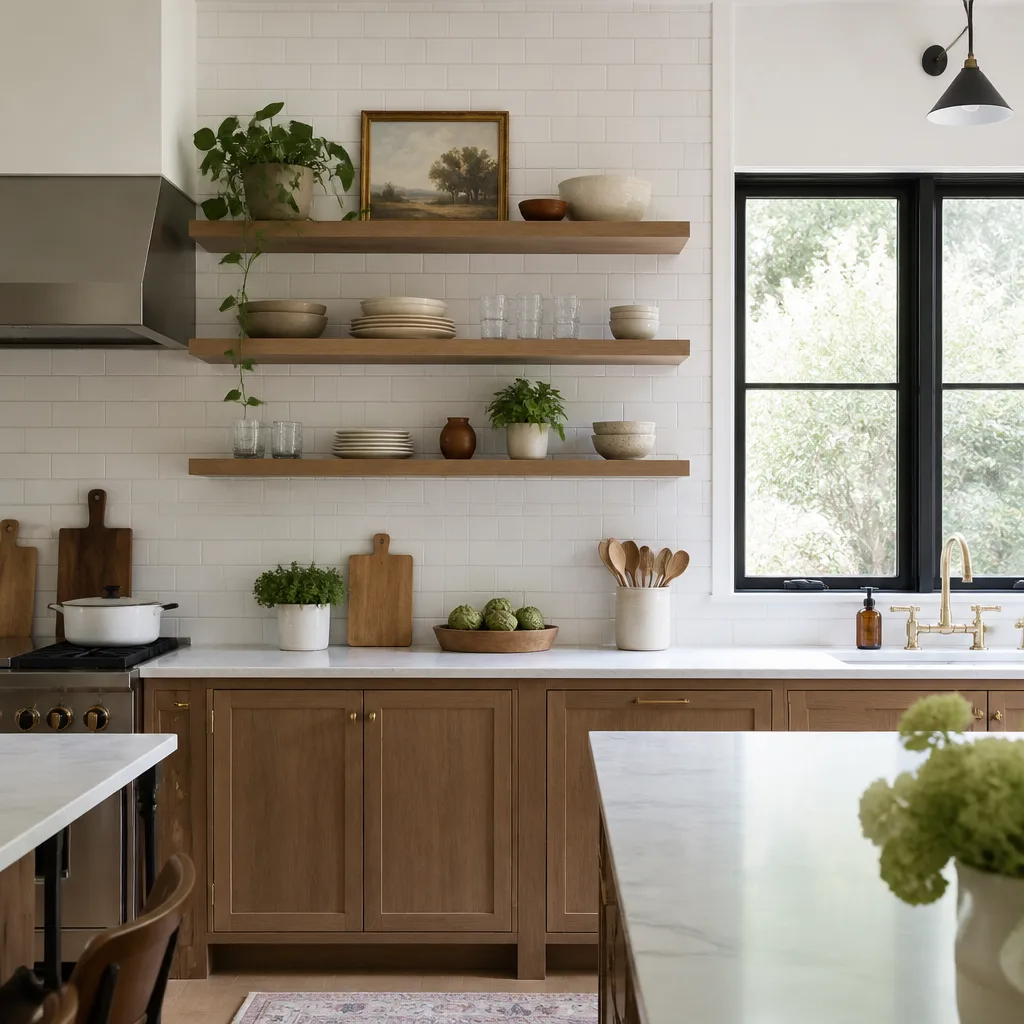 Open shelving
Free design consultation - KraftMaid and Wellborn cabinet lines, Cambria and Silestone surfaces, and every tier from refacing to full custom laid out side by side
Seasonal Kitchen Remodeling Care for Summerlin: Year-Round Homeowner’s Guide
Cabinet makers test their finishes in climate-controlled rooms, where humidity stays steady and temperatures rarely move more than a few degrees. A kitchen in Summerlin doesn’t live in those conditions. Interior walls near an exterior face can swing 40 degrees between a July afternoon and an air-conditioned evening, and the wood, caulk, quartz and grout in that kitchen feel every bit of it. Most care advice you’ll read online was written for a mild, humid four-season climate that doesn’t exist here. This guide is built for the actual desert valley: hot and bone-dry for months, then a brief July-August stretch when monsoon moisture pushes indoor humidity up hard and fast. We’ll walk through what to check each quarter, what’s quietly wearing out, and where a small habit now saves a repair later.
Quick Answer
Year-round kitchen care in Summerlin comes down to four seasonal checkpoints: inspect caulk and seals before peak summer heat, watch wood cabinet doors through monsoon humidity spikes in July and August, service the range hood and under-sink plumbing in fall after heavy summer use, and guard against winter dryness, which is the highest-risk period for cabinet cracking and paint checking. Add a few annual tasks most homeowners skip – hinge adjustment, grout sealing, and re-oiling exposed wood – and your kitchen’s materials will hold up far better than they would on autopilot.
Styles & brands we work with
- Shaker
- Modern flat-panel
- Two-tone cabinets
- KraftMaid
- Cambria quartz
- Butcher block
- Open shelving
Table of Contents
- Why Summerlin’s Climate Is Hard on Kitchens
- Spring Prep: Sealing Before the Heat Arrives
- Summer: Thermal Expansion and What It Does to Seams
- Monsoon Season: When Humidity Jumps in Days
- Fall Transition: Post-Summer Deep Check
- Winter Dry Season: The Highest-Risk Period for Wood
- The Annual Checklist Most Summerlin Homeowners Skip
- Common Mistakes to Avoid
- When to Call a Professional
- Frequently Asked Questions
Why Summerlin’s Climate Is Hard on Kitchens
Summerlin sits in the Las Vegas valley, and the valley does two things to a home’s interior that most kitchen materials weren’t designed around: it gets extremely hot, and it swings between near-zero humidity and sudden monsoon moisture. Neither is extreme on its own. The combination is what wears materials out faster than lab testing predicts.
In summer, exterior walls can reach temperatures well above the air-conditioned interior. A cabinet run against an east- or west-facing wall expands and contracts daily. Caulk lines at a backsplash seam flex with that movement. Quartz countertops, which have very low thermal expansion, are stable, but the wood and caulk around them aren’t, and that difference is where small gaps form.
Then the monsoon arrives. July and August bring brief, intense humidity spikes. Wood cabinet doors and drawer boxes absorb that moisture and swell slightly. A few days later, the dry air returns and they shrink back. Do that repeatedly and painted finishes start to check at the joints, and doors begin to sit unevenly in their openings.
This is the core insight for Summerlin homeowners: a kitchen here is maintained for the desert first, everything else second. That’s why we treat every material recommendation as climate-specific. When we specify cabinetry from KraftMaid or Wellborn, or quartz from Cambria, Silestone or Caesarstone, we’re thinking about how each one handles the swing between dry and monsoon. If you’re planning a Kitchen Remodeling Summerlin project, start with an honest read of your climate, not just a style board.
Spring Prep: Sealing Before the Heat Arrives
The single best window to fix anything that could become a water problem is spring, before the first sustained heat. Once summer arrives, thermal expansion opens tiny gaps and any existing weakness gets worse. Spring is when you want the seals tight.
Start with caulk. The joint where the backsplash meets the countertop, the seal around the sink rim, and any caulk line at a window or wall are the three places water most often sneaks in. Run a finger along each line and look for cracking, shrinking, or a gap you can feel. A caulk line that’s pulled away from the stone is an invitation. Re-caulk with a kitchen-rated silicone, not a painter’s caulk.
Next, check underneath. Open the cabinet under the sink and look at the cabinet floor and the base of the side panels for staining or soft spots. Look at the supply lines and the drain connection while you’re in there. A slow drip you never see from above will show up as a dark ring on the cabinet bottom.
Then move to the surfaces:
- Look for hairline cracks at the inside corners of quartz seams. A professionally set seam shouldn’t open, but if it does, it needs attention before summer expansion pushes it further.
- Check that the silicone seal at the base of the backsplash hasn’t been breached by the heat cycle.
- Wipe down cabinet faces with a damp cloth and a mild soap, then dry them fully. Avoid wax or oil polishes on painted or laminate fronts.
- Test every drawer and door. If a door drags, note it now, because spring is when hinge adjustment is easiest to do without stress on the frame.
If your spring check turns up a seal that’s failing around a countertop, that’s repair work best handled by someone who installs countertops for a living. A properly installed cabinet installation and countertop placement sets the baseline, but seals still age. Catching it in spring keeps the summer heat from turning a small gap into a bigger one.
Summer: Thermal Expansion and What It Does to Seams
By July, the valley is deep into its hot season, and the kitchen’s job is to stay cool and stable. That’s harder than it sounds. A cabinet run against an exterior wall can be 20 to 40 degrees warmer near the wall than the room air at the doors. The material closest to the wall expands more than the material near the front. Over a summer, that repeated stress shows up in a few predictable places.
Watch these over the hot months:
- Caulk and sealant joints: thermal movement is the main cause of caulk failure at backsplash and sink seams. If a line starts to lift, it’s heat movement, not poor-quality caulk.
- Cabinet door alignment: full-overlay doors can start to rub or sit proud of the frame as summer swelling peaks. That’s normal movement, but it means hinge adjustment may be needed in the fall.
- Quartz seams: Cambria, Silestone and Caesarstone are all engineered for low thermal expansion, which is one reason we specify them. The seam bond itself is what you’re watching, not the slab.
- Wood finish checking: if you see fine lines in a painted cabinet front in late summer, that’s the finish responding to the dry-to-moisture cycle, and it’s worth a look before winter dryness compounds it.
One summer habit that helps: keep the kitchen interior humidity as stable as you reasonably can. That means running the range hood while cooking, using the exhaust fan during and after showers in nearby bathrooms, and not leaving windows wide open on the hottest, driest afternoons. Stability is what materials want, and in a Summerlin kitchen in July, stability takes a little attention.
We also tell homeowners to hold off on heavy cabinet cleaning in peak summer. A wet cloth on a hot painted front dries unevenly and can leave marks. Save the deep clean for fall.
Monsoon Season: When Humidity Jumps in Days
July and August in Summerlin bring something the other ten months don’t: brief, intense humidity spikes from monsoon storms. Indoor humidity can climb from single digits to a much higher level in a matter of hours, then return to bone-dry within a day or two. That rapid swing is what catches wood cabinet doors and drawer boxes.
Here’s what actually happens: a wood door absorbs moisture and swells slightly. In a well-made cabinet from a line like Wellborn or KraftMaid, that swelling is small and the design accommodates some of it. But repeated swings stress the joints and the finish. Painted doors are the most vulnerable; the paint film can develop fine cracks at panel edges as the wood moves underneath it.
What to do during monsoon season:
- Watch the humidity inside your home for the few weeks of the monsoon. A simple hygrometer is enough. You don’t need to chase a specific number; you’re watching for big swings.
- If a storm rolls through and humidity climbs, run your air conditioning normally. It dehumidifies as it cools, which helps.
- Avoid opening windows wide during or right after a monsoon storm. You’re inviting the humidity in.
- Check cabinet doors for swelling or sticking after a humid stretch. If a door rubs for a day or two and then frees up, that’s the wood moving. If it stays stuck, that’s worth a hinge or alignment look.
This is where having cabinet lines you can actually compare matters. Different manufacturers build their doors and boxes with different tolerances for moisture movement. When we work through a kitchen remodeling project, we’ll show you how a KraftMaid door and a Wellborn door handle a desert moisture cycle differently, because the right choice depends on how the kitchen is used and where it sits in the house.
Fall Transition: Post-Summer Deep Check
Fall is the recovery season. The heat is easing, the monsoon is done, and the kitchen has been through its hardest stretch. This is when a real inspection pays off, before winter dry air arrives and compounds any problem.
The two areas that need the most attention after a heavy summer are the range hood and the plumbing under the sink.
Range hood filters. Cooking grease builds up faster in a hot kitchen, and a clogged filter cuts airflow, which means the hood struggles to clear smoke and moisture while you cook. Remove the filters, wash them in hot water with a degreaser (or run them through the dishwasher if the manufacturer allows it), and check the exterior vent flap if it’s accessible. If the hood sounds louder than usual or moves less air, the filter is usually the reason.
Under-sink plumbing. Summer use stresses supply lines and the drain connection. Look for corrosion at the fittings, moisture on the cabinet floor, and any sign the shutoff valves are stiff or weeping. A valve that won’t close cleanly is worth replacing before it fails.
Then run through the full post-summer list:
- Recheck all caulk lines you addressed in spring; the summer cycle tests them.
- Adjust cabinet hinges if doors are rubbing or misaligned.
- Wipe down cabinet faces with a mild cleaner and dry them completely.
- Clean the vent hood and check the fan operation.
- Look for any new cracking at quartz seams and note it.
If your kitchen was installed with a lineup we work with – Cambria, Silestone or Caesarstone for countertops, KraftMaid or Wellborn for cabinetry – the fall check is also the time to note anything that might fall under a manufacturer’s warranty before it progresses. Warranties reward the homeowner who documents issues early.
Winter Dry Season: The Highest-Risk Period for Wood
Winter in Summerlin is dry. Really dry. Indoor humidity can sit in the low teens or lower for weeks. For a kitchen full of wood cabinetry and painted finishes, this is the highest-risk period of the year, and most homeowners don’t realize it.
Here’s why. Wood is hygroscopic, meaning it takes on and gives off moisture with the air around it. In a dry winter, a wood cabinet door loses moisture and shrinks. As it shrinks, the panels that make up the door and the frame move slightly against each other. Over a dry winter, that movement can lead to two things: fine cracks at joints and hinges that loosen as the wood shrinks around the screw. Painted finishes are especially exposed, because paint doesn’t stretch. Where the wood pulls, the paint film can check or split.
What winter humidity management looks like:
- Track indoor humidity through the winter. A cheap hygrometer tells you what you need to know. If it’s consistently very low, you’ll see the effects on wood over the season.
- Run a whole-home humidifier if you have one. A kitchen doesn’t need its own; the whole house benefits, and cabinets get the benefit too.
- If you don’t have a humidifier, a small room humidifier in the main living area, not right next to cabinetry, helps keep the swing from being extreme. Don’t place a humidifier close to wood doors; you want gradual, even moisture, not a direct stream.
- Keep cabinet doors closed as much as practical and avoid drying them out further with direct heat from an oven or heater vent pointed at the cabinetry.
Watch painted doors especially. If you notice fine cracks, don’t panic – note them and plan to address them in spring. If a hinge has loosened, a simple tightening is often enough, but if the screw hole has stripped, it needs repair with a proper wood filler and re-drill. That’s a small job, but doing it wrong strips the hole further.
The Annual Checklist Most Summerlin Homeowners Skip
These are the tasks that don’t come up in the seasonal routine but quietly matter. Skipping them is where a small wear item turns into a repair call. Here’s the annual list, in the order it’s easiest to do.
- Adjust hinges on full-overlay cabinet doors. Full-overlay doors sit right on the frame with a small reveal, and over a year of swelling and shrinking, they can pull out of alignment. A quarter-turn on the adjustment screws realigns them. It takes a few minutes per door and keeps the kitchen looking and functioning right.
- Seal grout on natural stone tile. If your backsplash or floor is natural stone, the grout and the stone both need a penetrating sealer once a year. In a desert kitchen, staining isn’t the big risk; the dryness is, because unsealed stone loses moisture unevenly. A proper sealer keeps it stable.
- Re-oil exposed wood elements. Any exposed wood in or around the kitchen – a butcher-block counter, a wood-trim detail – benefits from a food-safe oil once a year. The dry air pulls oil out, and the surface starts to look tired and crack-prone. Re-oiling restores it.
- Inspect the dishwasher and ice-maker connections. These are the two appliances most likely to develop a slow leak. Check the supply lines under the sink annually.
- Look at the backsplash and sink seal again. It’s the highest-use area in the kitchen and the most common place for a small water problem.
If you’re reading this and thinking your kitchen may be past the maintenance stage, that’s worth a conversation. A full Summerlin kitchen assessment can tell you whether these are small touch-ups or whether the materials are near the end of their life.
Common Mistakes to Avoid
- Using painter’s caulk around a sink or backsplash. It’ll fail in a summer’s heat cycle. Kitchen-rated silicone is the right product; anything else is a short-term patch.
- Cleaning painted cabinet fronts with wet cloths in summer. Deep cleaning in peak heat dries unevenly and leaves marks. Save the deeper clean for fall, and use a damp – not wet – cloth.
- Ignoring humidity swings through monsoon season. The July-August spikes are the most common cause of wood movement in Summerlin kitchens. Watching indoor humidity for a few weeks is the cheapest protection you have.
- Skipping the winter humidity routine. Winter dry air is the major risk period for painted cabinet cracking, and most homeowners think of winter as the easy season. It isn’t, here.
- Overtightening hinges to fix a sagging door. Over-tightening strips the wood screw hole. Adjust the hinge properly, or repair a stripped hole with wood filler and re-drill.
- Trying to fix a failed quartz seam with household filler. A seam that’s opened is a sign the bond failed. A professional repair preserves the warranty position; a home patch doesn’t.
- Assuming the manufacturer’s care instructions are climate-neutral. They’re written for a broader market. In a desert valley kitchen, you’re maintaining for the swing between dry and monsoon, which most care guides don’t address at all.
When to Call a Professional
Most of what’s in this guide you can do yourself. But some problems are beyond a homeowner’s tools, and recognizing that early is what keeps a small issue from becoming a big one. Call a professional if:
- A caulk or seal line has opened at a countertop seam and doesn’t respond to a straightforward re-caulk.
- A cabinet door is warped or its panel has separated, rather than simply out of alignment.
- A hinge screw has stripped the wood and a simple repair won’t hold.
- You’ve found staining or soft wood under the sink, which points to a leak that needs a plumber’s diagnosis.
- A quartz seam has opened or a crack has developed in the slab.
For cabinetry and countertop issues specifically, an experienced installer is the right call, and a kitchen-focused one is better than a generalist. Kitchen Remodeling Summerlin offers free estimates in Summerlin – call (866) 655-6132. We answer 24/7. Fast dispatch from 7am to 7pm, Sunday through Friday.
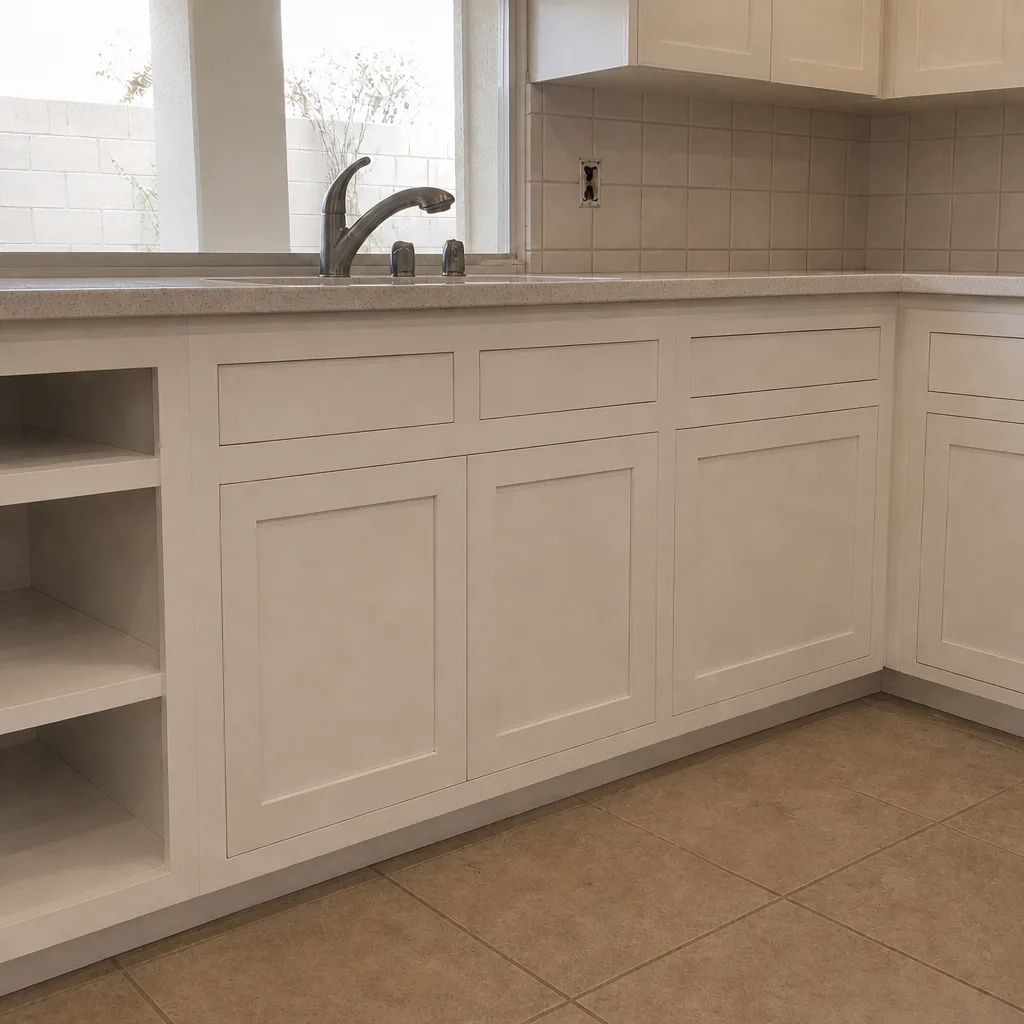
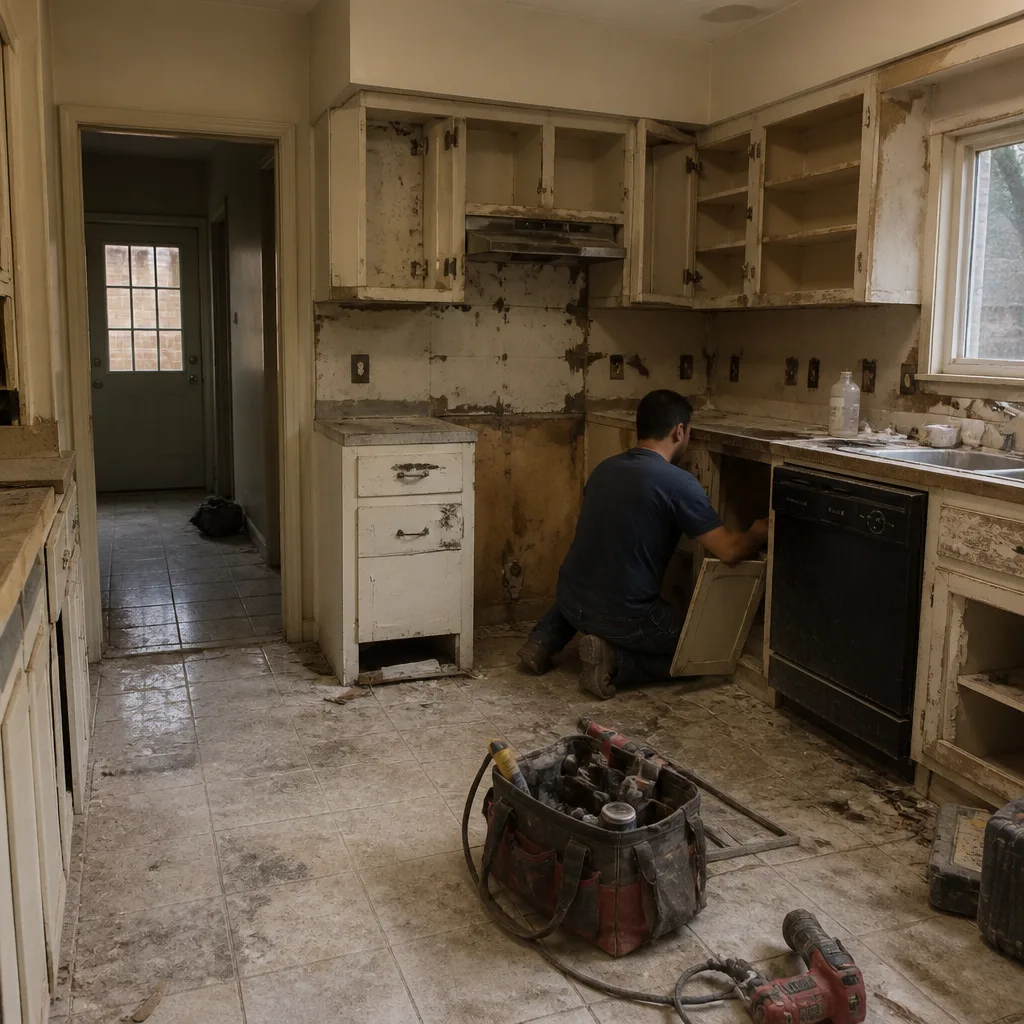
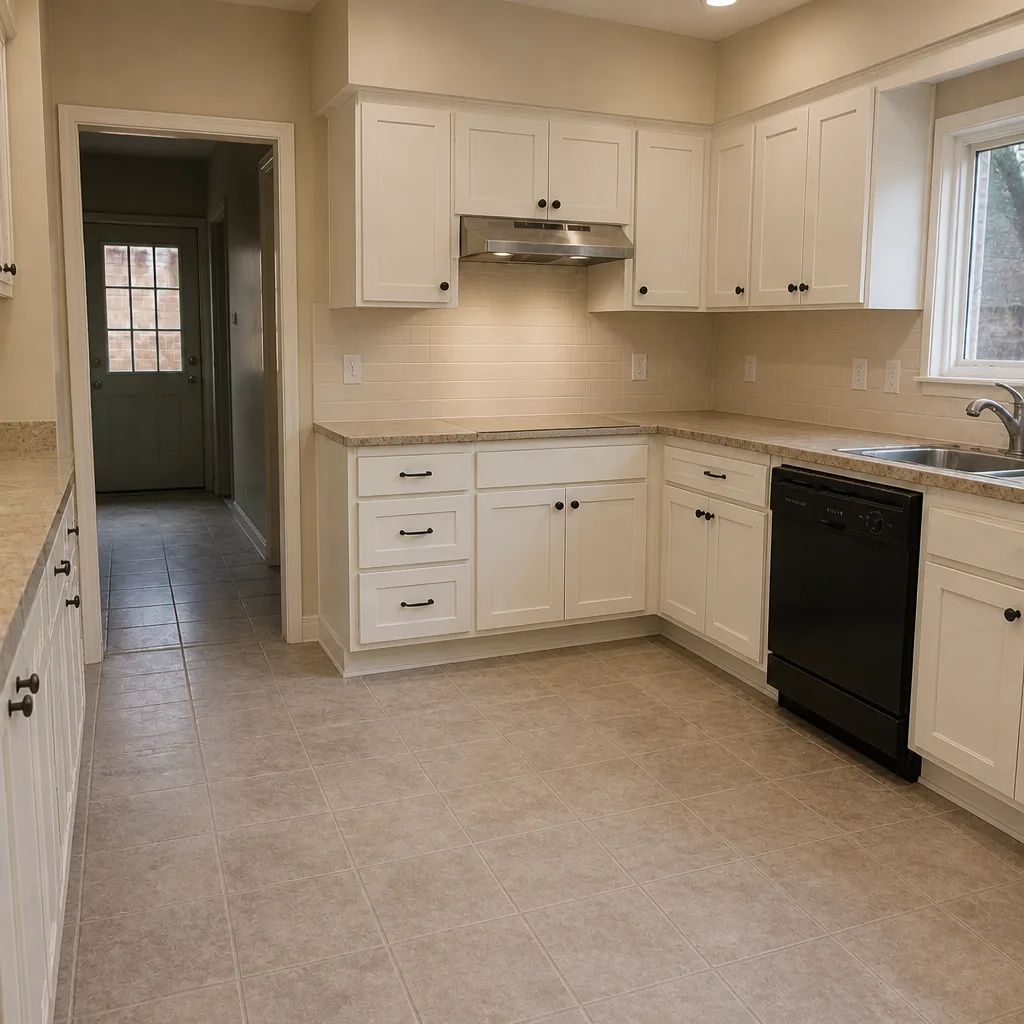
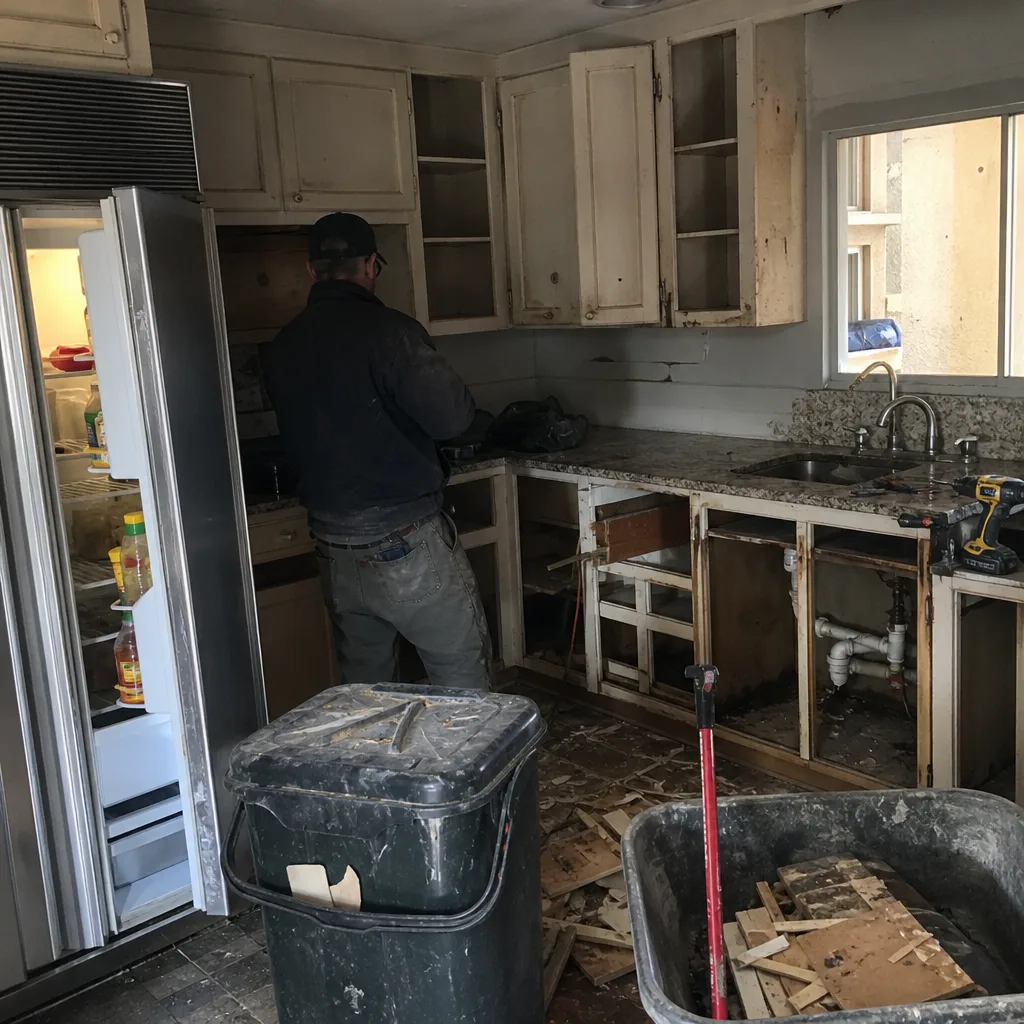
See the difference
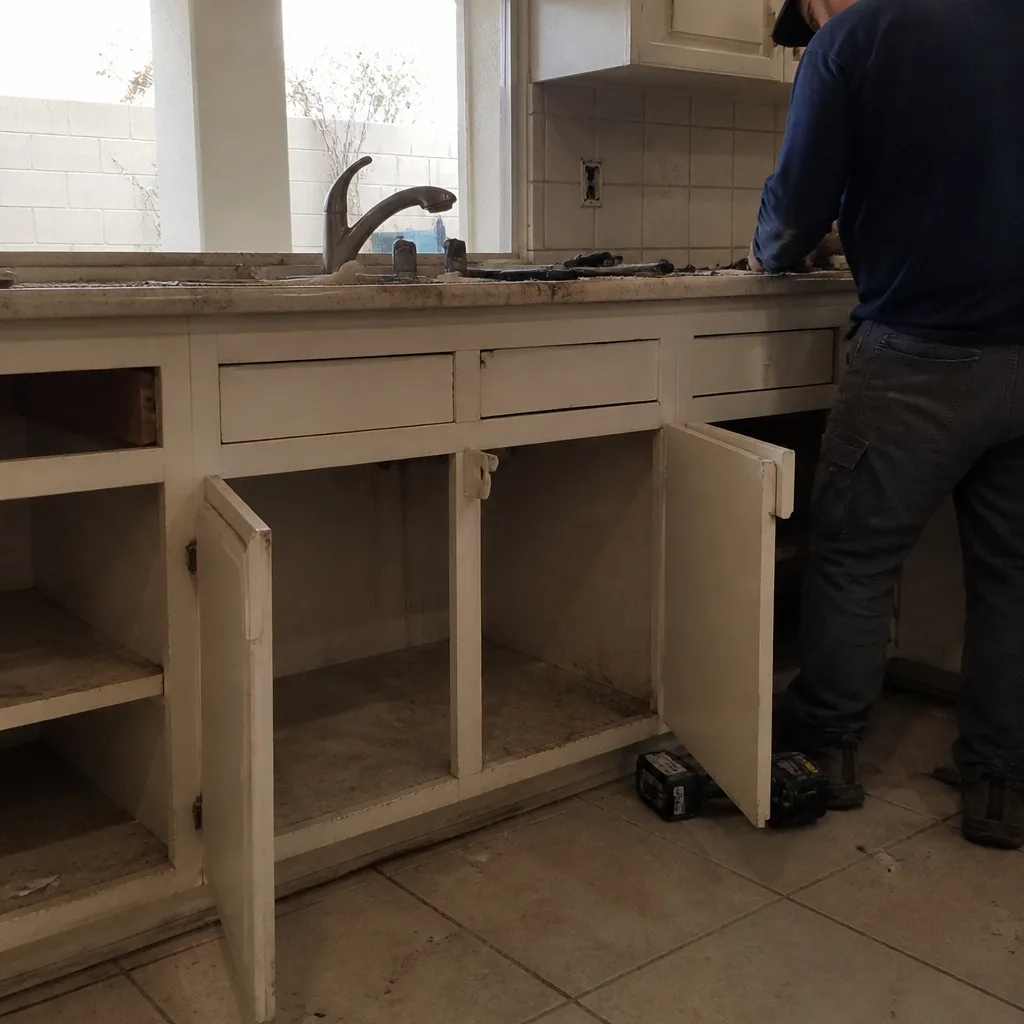 Before
 After
 Before
 After
 Before
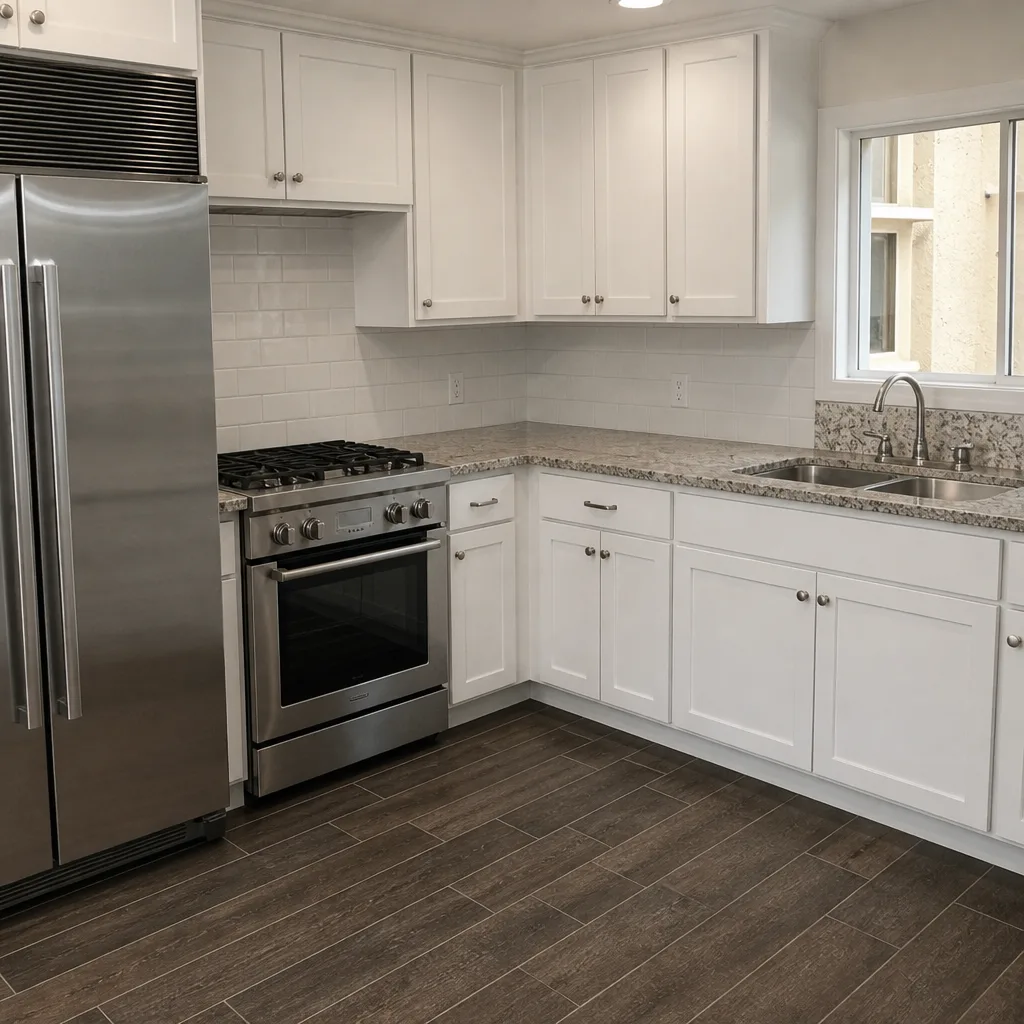 After
What to Check This Week, This Month, and This Quarter
A seasonal routine works best when it’s reduced to a few specific checks. Here’s the short version, organized by cadence.
This week: run a finger along the caulk at your sink rim and backsplash. Look under the cabinet for any moisture or staining. Check that every cabinet door opens without rubbing.
This month: if you’re heading into summer, re-seal any caulk line that’s pulled away. Clean the range hood filter. Note any door that’s out of alignment.
This quarter: do the deeper seasonal pass appropriate to the season, and track your indoor humidity for a few weeks to see what your house is doing. A hygrometer is the least expensive tool in this whole guide, and it tells you more about your kitchen’s risk than anything else you can buy.
Frequently Asked Questions
Check it in spring and again in fall, which catches both the summer expansion cycle and the post-summer recovery. Look for cracking, shrinking, or any gap you can feel with a finger. A caulk line that’s failing around a sink or backsplash is the most common source of slow water intrusion in a kitchen, and catching it before peak summer heat matters most.
Yes, they can. Wood cabinet doors and drawer boxes absorb moisture during a monsoon humidity spike and then shrink back as dry air returns. Repeated swings stress joints and finishes, and painted doors are the most vulnerable. Tracking indoor humidity through July and August, and running the AC normally to help dehumidify, is the simplest way to limit the effect.
For wood and painted finishes, yes. Winter’s very low indoor humidity pulls moisture from wood, which shrinks and can check the paint film at joints. Summer heat mainly stresses caulk and seams. So the two seasons have different risks, and winter dryness is the one most Summerlin homeowners underestimate.
First, see whether it frees up on its own after the humidity drops; slight swelling during a monsoon stretch is normal wood movement. If it stays out of alignment, adjust the hinge rather than forcing the door. If a hinge screw has stripped the wood, repair the hole with wood filler and re-drill before reattaching.
Once a year is the right cadence for natural stone tile grout and the stone itself. Desert dryness pulls moisture from unsealed stone unevenly, and a penetrating sealer keeps the surface stable. Do it in fall, after the high-use summer, so it’s protected through the dry winter.
Re-oiling a butcher-block or exposed wood surface is a straightforward homeowner task with a food-safe oil once a year. If the wood has dried and split or shows deep cracking rather than just looking tired, that’s worth a professional look before you oil over it. Call (866) 655-6132 for a free estimate if you’re unsure – estimates are free.
The Bottom Line
Kitchen care in Summerlin is climate-first care. The desert gives your materials a dry season, a monsoon season, and a hot season, and each one stresses different things. Spring is for sealing before the heat. Summer is for watching expansion at the seams. Monsoon season is for watching wood movement. Fall is for the deep check. Winter is for guarding against dryness, the quiet risk. Layer in the annual tasks most homeowners skip – hinge adjustment, grout sealing, re-oiling exposed wood – and your kitchen holds up far longer than a lab-tested warranty would predict. When a repair goes beyond a homeowner’s tools, get a free estimate. Call (866) 655-6132. We answer 24/7. Fast dispatch from 7am to 7pm, Sunday through Friday.
Written by the team at Kitchen Remodeling Summerlin.